6 Best Fast CoreXY 3D Printers in 2026
The Bambu Lab X1 Carbon is the strongest all-round pick for most buyers: a fully enclosed CoreXY machine with a fast motion system, automatic bed leveling and multi-color support through the AMS. If you want a bigger build volume, look at the Creality K2 Plus.
 By Shihab Mia · Published 27 Nov 2026
We run no ads and no affiliate links at launch. The order of a list follows our published method. How lists are ordered: how we score.
Prices are the starting prices vendors list publicly. Plans change, so confirm the current price on the vendor page before you buy.
Key takeaways
- CoreXY moves the toolhead on a fixed gantry, so the bed only moves in Z, which helps with speed and tall prints.
- Enclosed models handle ABS and ASA better; open-frame models are cheaper but draft-sensitive.
- Prices below are vendor list prices in USD and change often; check the vendor site before buying.
- Multi-color printing usually needs an optional filament system, which adds cost.
- All seven picks are current models sold by their manufacturers, released between 2023 and 2025.
Side-by-side
Grouped by fit and cost. Tap a product to jump to its full entry.
| Fit | Cost | |||
|---|---|---|---|---|
| Product | Best for | Standout feature | Listed starting price | Free plan or trial |
| 1Bambu Lab X1 Carbon | Enclosed all-round printing with automation | Fully enclosed CoreXY frame | Check current retail price | One-time hardware purchase |
| 2Creality K2 Plus | Large enclosed CoreXY prints | Large enclosed build volume | Check current retail price | One-time hardware purchase |
| 3Prusa Core One | Repairability and open documentation | Open-source firmware and printable parts | Check current retail price | One-time hardware purchase |
| 4Bambu Lab P1S | Enclosed printing at a lower price | Enclosed CoreXY frame at a mid price | Check current retail price | One-time hardware purchase |
| 5Qidi Tech X-Plus 3 | Enclosed high-temperature printing | High hotend and chamber temperatures | Check current retail price | One-time hardware purchase |
| 6Sovol SV08 | Open-frame speed and build size | Large build volume for the price | Check current retail price | One-time hardware purchase |
How we picked
We compared these printers using manufacturer product pages, published spec sheets and user documentation. We checked build volume, hotend and bed temperature ratings, enclosure type, motion system details and multi-color options. Prices are the vendor's own list prices in USD at the time of writing and may change. We did not run lab tests; every figure here comes from the vendor or public documentation, and buyers should confirm current specs and prices on the official site before ordering.
The 6 picks in detail
- Best for
- Enclosed all-round printing with automation
- Standout
- Fully enclosed CoreXY frame
- Starting price
- Check current retail price
- Free plan or trial
- One-time hardware purchase
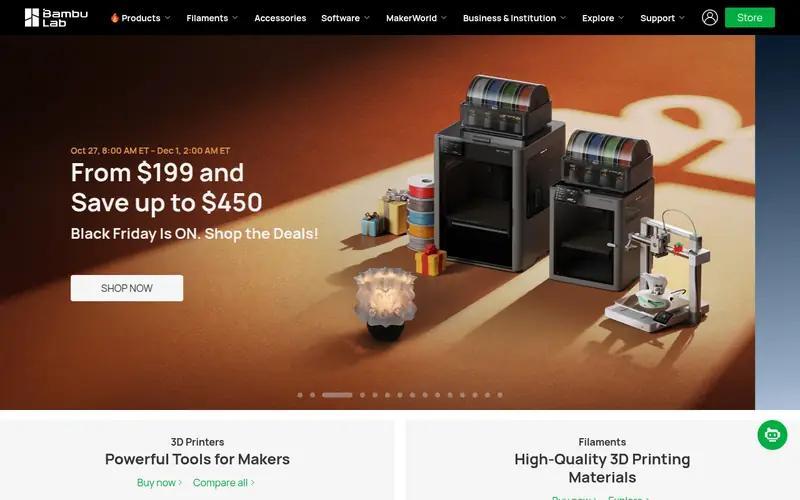
The X1 Carbon is a fully enclosed CoreXY printer aimed at users who want fast prints with minimal tuning. The vendor lists a 256 x 256 x 256 mm build volume, a heated bed reaching 120 C, and a hotend rated to 300 C. A carbon fiber composite gantry keeps the moving mass low, which supports high acceleration.
Bambu Lab includes automatic bed leveling, vibration compensation and a lidar sensor for first-layer checks. The combo bundle adds the AMS, which holds four spools and swaps filament during a print. It suits small businesses and hobbyists who print often and want consistent results without manual calibration.
The catch is cost and ecosystem lock-in. Replacement parts, nozzles and the AMS come from Bambu Lab, and some features depend on the company's cloud service. Buyers who want fully open firmware should look elsewhere.
Where the price comes from
Check current retail price. Hardware prices move often, so check the Bambu Lab X1 Carbon maker page or a retailer before you buy.
Benefits
- Fully enclosed CoreXY frame
- lidar-based first-layer inspection and auto calibration
- AMS multi-color system included in the combo
Drawbacks
- Premium price
- proprietary parts and cloud features
Use case to skip: this limit matters to you: premium price.
Our take. A sensible pick for enclosed all-round printing with automation.
If it does not fit, compare Creality K2 Plus or Prusa Core One in this list.
- Best for
- Large enclosed CoreXY prints
- Standout
- Large enclosed build volume
- Starting price
- Check current retail price
- Free plan or trial
- One-time hardware purchase
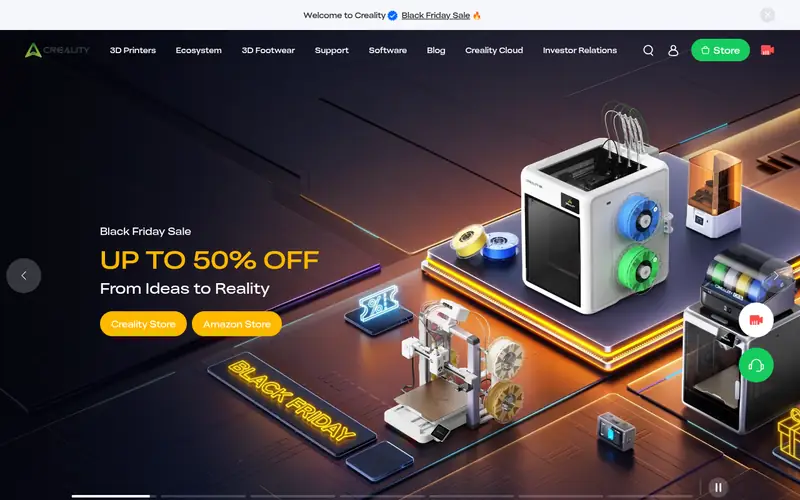
The K2 Plus is Creality's large enclosed CoreXY model. The vendor lists a 350 x 350 x 350 mm build volume, a chamber heater, and a hotend rated to 350 C, which covers materials like ABS, ASA and some nylon blends. The frame is fully enclosed to hold chamber temperature and reduce drafts.
It ships with automatic bed leveling, an input shaping routine for ringing reduction, and a camera for remote monitoring. Creality sells the CFS filament system separately or in bundles for multi-color work. The machine suits users who need big parts in engineering plastics and have room for a large footprint.
The main catch is price and size. At $1,499 it costs more than most hobbyist printers, and the enclosure takes significant bench space. Buyers printing only PLA may not need the chamber heater.
Where the price comes from
Check current retail price. Hardware prices move often, so check the Creality K2 Plus maker page or a retailer before you buy.
Benefits
- Large enclosed build volume
- 350 C hotend for engineering filaments
- CFS multi-color system available
Drawbacks
- High price
- large footprint
Use case to skip: this limit matters to you: high price.
Our take. A sensible pick for large enclosed CoreXY prints.
If it does not fit, compare Bambu Lab X1 Carbon or Prusa Core One in this list.
- Best for
- Repairability and open documentation
- Standout
- Open-source firmware and printable parts
- Starting price
- Check current retail price
- Free plan or trial
- One-time hardware purchase
The Prusa Core One is Prusa Research's enclosed CoreXY printer, sold as a kit or assembled. The vendor lists a 250 x 210 x 220 mm build volume and a heated bed reaching 120 C. The frame is enclosed with a door and filter option, which helps with ABS and ASA.
Prusa publishes assembly guides, firmware source and printable replacement parts. The printer uses the company's own Nextruder toolhead and supports its multi-material unit as an add-on. It suits buyers who value long-term repairability and documented upgrades over raw speed claims.
The catch is that the kit requires assembly, which takes hours, and the motion system is not the fastest on paper. Buyers who want a plug-and-play box with the highest acceleration should compare carefully.
Where the price comes from
Check current retail price. Hardware prices move often, so check the Prusa Core One maker page or a retailer before you buy.
Benefits
- Open-source firmware and printable parts
- enclosed CoreXY design
- strong documentation and spare parts catalog
Drawbacks
- Kit assembly takes time
- slower than some rivals on paper
Use case to skip: this limit matters to you: kit assembly takes time.
Our take. A sensible pick for repairability and open documentation.
If it does not fit, compare Bambu Lab X1 Carbon or Creality K2 Plus in this list.
- Best for
- Enclosed printing at a lower price
- Standout
- Enclosed CoreXY frame at a mid price
- Starting price
- Check current retail price
- Free plan or trial
- One-time hardware purchase
The P1S is the enclosed sibling of Bambu Lab's P1P. The vendor lists a 256 x 256 x 256 mm build volume, a heated bed reaching 100 C, and a hotend rated to 300 C. The enclosure helps with ABS and ASA and reduces noise.
It uses the same CoreXY motion platform as the higher-end X1 series but drops the lidar sensor and some calibration hardware. Automatic bed leveling and vibration compensation are included. It works with the AMS for multi-color printing, sold separately or in bundles.
The catch is the reduced feature set compared with the X1 Carbon, and the same ecosystem lock-in. It suits buyers who want an enclosed fast printer without paying the flagship price.
Where the price comes from
Check current retail price. Hardware prices move often, so check the Bambu Lab P1S maker page or a retailer before you buy.
Benefits
- Enclosed CoreXY frame at a mid price
- fast motion system
- AMS compatible
Drawbacks
- No lidar
- smaller feature set than the X1 Carbon
Use case to skip: this limit matters to you: no lidar.
Our take. A sensible pick for enclosed printing at a lower price.
If it does not fit, compare Bambu Lab X1 Carbon or Creality K2 Plus in this list.
- Best for
- Enclosed high-temperature printing
- Standout
- High hotend and chamber temperatures
- Starting price
- Check current retail price
- Free plan or trial
- One-time hardware purchase
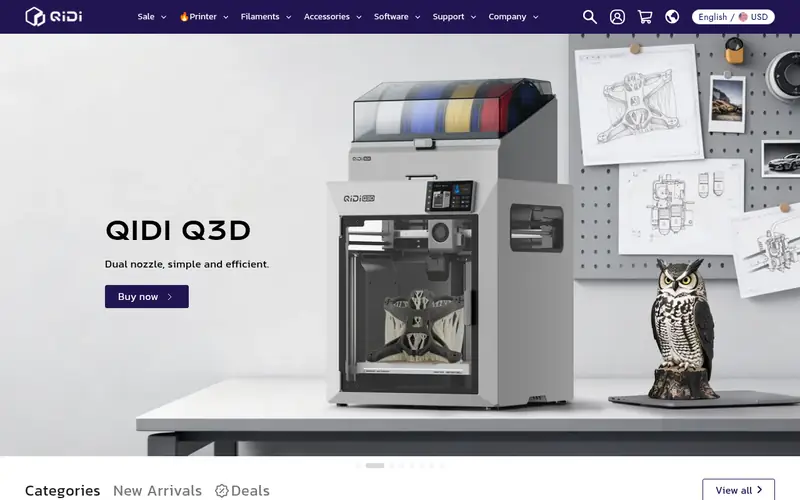
The Qidi Tech X-Plus 3 is an enclosed CoreXY printer built for engineering materials. The vendor lists a 280 x 280 x 270 mm build volume, a hotend rated to 350 C, and an active chamber heater. That combination covers ABS, ASA, polycarbonate and some nylon blends.
It includes automatic bed leveling, a camera and a filament runout sensor. The enclosure and heater are the main selling points for users printing functional parts rather than display models. It suits small workshops and engineers who need repeatable high-temp prints.
The catch is a smaller user community and support network than Bambu Lab or Creality, and the machine is heavy. Buyers who only print PLA will pay for capability they do not use.
Where the price comes from
Check current retail price. Hardware prices move often, so check the Qidi Tech X-Plus 3 maker page or a retailer before you buy.
Benefits
- High hotend and chamber temperatures
- enclosed CoreXY frame
- active chamber heater
Drawbacks
- Smaller community than major brands
- heavier machine
Use case to skip: this limit matters to you: smaller community than major brands.
Our take. A sensible pick for enclosed high-temperature printing.
If it does not fit, compare Bambu Lab X1 Carbon or Creality K2 Plus in this list.
- Best for
- Open-frame speed and build size
- Standout
- Large build volume for the price
- Starting price
- Check current retail price
- Free plan or trial
- One-time hardware purchase
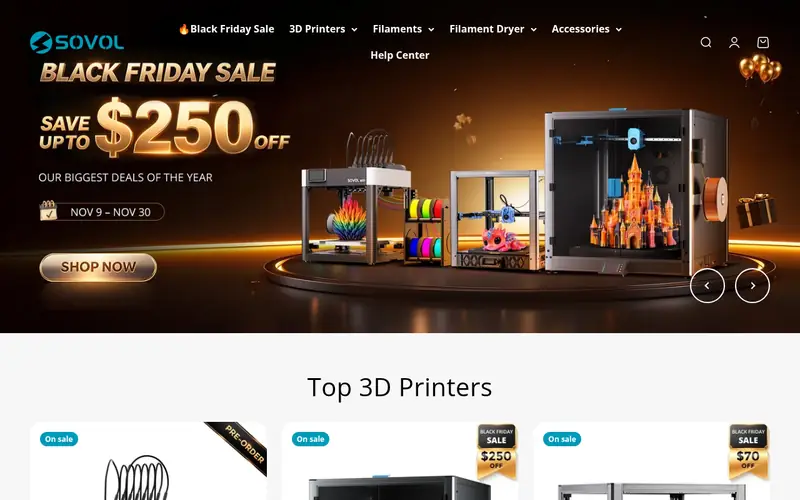
The Sovol SV08 is an open-frame CoreXY printer with a large build volume. The vendor lists a 350 x 350 x 350 mm build area and a motion system based on Klipper firmware, which allows user configuration. It suits buyers who want speed and size and are willing to tune settings.
It includes automatic bed leveling and a direct-drive extruder. Because the frame is open, drafts affect ABS and ASA, so an enclosure or a draft-free room helps. The Klipper base gives experienced users room to adjust macros and input shaping.
The catch is the open frame and the tuning work. It is not a plug-and-play appliance, and buyers who want a sealed box should look at the enclosed picks above.
Where the price comes from
Check current retail price. Hardware prices move often, so check the Sovol SV08 maker page or a retailer before you buy.
Benefits
- Large build volume for the price
- CoreXY motion
- open firmware based on Klipper
Drawbacks
- No enclosure
- setup and tuning needed
Use case to skip: this limit matters to you: no enclosure.
Our take. A sensible pick for open-frame speed and build size.
If it does not fit, compare Bambu Lab X1 Carbon or Creality K2 Plus in this list.
What specs matter most when buying a fast CoreXY 3D printer?
The motion system, hotend temperature and enclosure matter most. CoreXY geometry keeps the motors off the moving gantry, which reduces inertia and supports higher acceleration. Look at the maximum acceleration and jerk figures the vendor publishes, not just the top speed claim, because real print time depends on how quickly the toolhead changes direction.
Hotend temperature sets your material range. A 300 C hotend covers PLA, PETG, ABS and ASA. For polycarbonate or some nylon blends you want 350 C and, ideally, an active chamber heater. Bed temperature matters too: 100 C handles common materials, while 120 C gives more headroom for engineering plastics.
Enclosure is the third factor. An enclosed chamber holds heat and blocks drafts, which reduces warping on ABS and ASA. Open-frame printers are cheaper and easier to service but need a draft-free room or a DIY enclosure for those materials.
Finally, check the build volume against the parts you actually print, and confirm whether multi-color needs an optional filament system. Add the cost of that system, spare nozzles and any enclosure before comparing prices.
Which CoreXY printer should I buy if I need an enclosure but have a tight budget?
The Bambu Lab P1S is the pick if you need an enclosure and want to spend less than the flagship price. At a $599 vendor list price it gives you a sealed CoreXY frame, automatic bed leveling and AMS compatibility. The Qidi Tech X-Plus 3 at $799 is the step up if you need a 350 C hotend and a chamber heater for engineering plastics.
Weigh that added cost against the enclosed picks before deciding.
Questions worth answering first
Buying checklist
- Confirm the build volume covers the largest part you plan to print, including brim or supports.
- Check the hotend and bed temperature ratings against the materials you use most.
- Decide whether you need an enclosure for ABS, ASA or engineering plastics.
- Add the cost of any multi-color filament system, since it is often sold separately.
- Check spare part availability and whether the firmware is open or proprietary.
- Confirm the machine's footprint and weight fit your bench and doorway.
FAQ
Do I need an enclosure for a CoreXY printer?
Only if you print materials that warp, such as ABS or ASA. PLA and PETG print fine on open-frame machines in a draft-free room. Enclosed models hold chamber heat and block drafts, which improves layer adhesion and reduces warping on large parts.
Is CoreXY faster than a bed-slinger?
Usually yes, because the bed only moves in Z and the toolhead carries less mass. That allows higher acceleration and quicker direction changes. Real print time still depends on the slicer profile, part geometry and the printer's tuning, not just the motion type.
Can these printers print carbon fiber filament?
Some can, if the hotend and nozzle are rated for it. Abrasive filaments wear brass nozzles, so a hardened steel or ruby nozzle is needed. Check the vendor's material guide and hotend temperature rating before buying abrasive filament.
What is the difference between the Bambu Lab P1S and X1 Carbon?
The X1 Carbon adds a lidar sensor for first-layer inspection and more calibration hardware. The P1S uses the same enclosed CoreXY platform with a reduced feature set and a lower price. Both support the AMS multi-color system.
How much space does a large CoreXY printer need?
Large models with 350 mm build volumes need a bench deeper and wider than the machine itself, plus clearance for the bed and door. Check the vendor's external dimensions and add room for filament spools and cables before ordering.
Are these printers sold as kits or assembled?
It varies. The Prusa Core One is sold as a kit or assembled, while most others ship largely assembled with some setup. Check the vendor page for the exact configuration, since bundles with filament systems differ.
Sources we checked
Change log: First published 27 Nov 2026.