7 Best Function Generators for Hobbyists in 2026
The Rigol DG1022Z is the best starting point for most hobbyists: two channels, 25 MHz sine output and a built-in arbitrary waveform mode at a price that stays reasonable. If you need more bandwidth for RF or fast digital work, look at the Siglent SDG2042X. If budget is the main constraint, the FeelTech FY6900 covers basic signal generation for very little money.
 By Shihab Mia · Published 27 Nov 2026
We run no ads and no affiliate links at launch. The order of a list follows our published method. How lists are ordered: how we score.
Prices are the starting prices vendors list publicly. Plans change, so confirm the current price on the vendor page before you buy.
Key takeaways
- The Rigol DG1022Z lists around $399 and covers 25 MHz sine with two channels.
- The Siglent SDG2042X reaches 40 MHz and adds a large touchscreen, at a higher price.
- The FeelTech FY6900 sells for well under $100 and suits simple audio and digital testing.
- Arbitrary waveform memory matters more than headline frequency for complex signals.
- All seven units are hardware, so there is no free plan or software subscription.
Side-by-side
Grouped by fit and cost. Tap a product to jump to its full entry.
| Fit | Cost | |||
|---|---|---|---|---|
| Product | Best for | Standout feature | Listed starting price | Free plan or trial |
| 1Rigol DG1022Z | All-round hobby bench generator | Two independent channels | Check current retail price | One-time hardware purchase |
| 2Siglent SDG2042X | Higher bandwidth with touch control | 40 MHz sine output | Check current retail price | One-time hardware purchase |
| 3FeelTech FY6900 | Lowest-cost basic signal generation | Very low cost | Check current retail price | One-time hardware purchase |
| 4Rigol DG811 | Simple single-channel work | Lower cost than two-channel Rigol models | Check current retail price | One-time hardware purchase |
| 5Siglent SDG1032X | Two channels at a mid price | Two channels | Check current retail price | One-time hardware purchase |
| 6Hantek HDG2000B series | Arbitrary waveforms on a budget | Two channels | Check current retail price | One-time hardware purchase |
| 7OWON XDG3000 series | Lab-style features at mid range | Two channels | Check current retail price | One-time hardware purchase |
How we picked
This guide is based on vendor product pages, published datasheets and official documentation for each model. We compared frequency range, channel count, sample rate, vertical resolution, arbitrary waveform support, modulation modes and connectivity. Prices come from manufacturer list prices where published, and we mark others as check current retail price. We did not run lab tests. The goal is to match each generator to a typical hobbyist workload rather than rank raw specs.
The 7 picks in detail
- Best for
- All-round hobby bench generator
- Standout
- Two independent channels
- Starting price
- Check current retail price
- Free plan or trial
- One-time hardware purchase
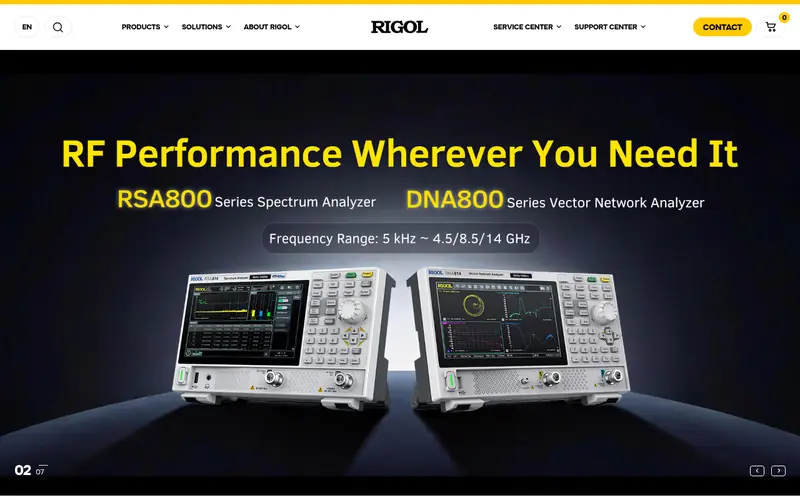
The DG1022Z is a two-channel function and arbitrary waveform generator from Rigol's DG1000Z line. According to the datasheet, it produces sine waves to 25 MHz, square to 25 MHz and pulses to 25 MHz, with a sample rate of 200 MSa/s and 14-bit vertical resolution. Arbitrary waveforms can be built on the instrument or loaded from a PC.
It covers the standard modulation types (AM, FM, PM, FSK, PWM and sweep) and includes a harmonic generator mode. Connectivity includes USB host and device, and LAN on some variants. For a hobbyist who needs clean sine, square and triangle signals plus occasional custom waveforms, it is a sensible default.
The main catch is the interface. There is no touchscreen, so you navigate menus with soft keys and a knob. Budget a little time to learn the layout.
Where the price comes from
Check current retail price. Hardware prices move often, so check the Rigol DG1022Z maker page or a retailer before you buy.
Benefits
- Two independent channels
- 25 MHz sine and 200 MSa/s sample rate
- built-in arbitrary waveform and modulation modes
Drawbacks
- No touchscreen
- front panel menu navigation takes practice
Use case to skip: this limit matters to you: no touchscreen.
Our take. A sensible pick for all-round hobby bench generator.
If it does not fit, compare Siglent SDG2042X or FeelTech FY6900 in this list.
- Best for
- Higher bandwidth with touch control
- Standout
- 40 MHz sine output
- Starting price
- Check current retail price
- Free plan or trial
- One-time hardware purchase
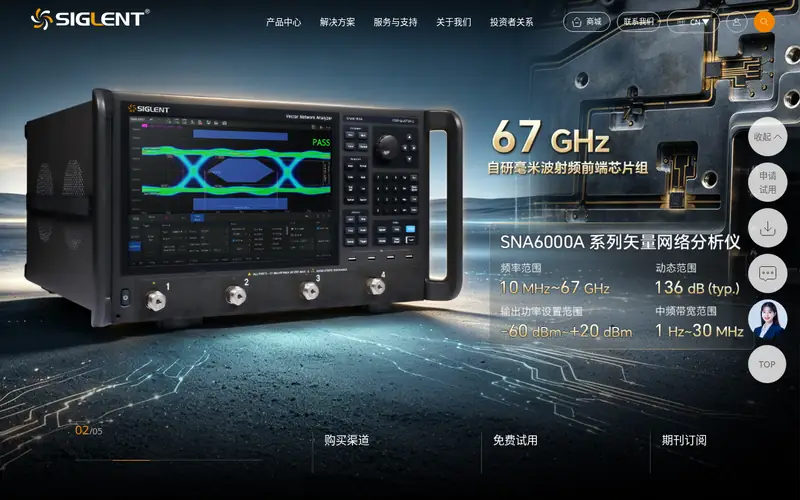
The SDG2042X sits in Siglent's SDG2000X series. The vendor lists 40 MHz maximum sine frequency, two channels, and a sample rate of 1.2 GSa/s with 16-bit resolution. The front panel uses a touchscreen, which speeds up setting frequency, amplitude and waveform type compared with menu-driven units.
Arbitrary waveform memory is generous for the class, and the instrument supports the usual modulation set plus sweep and burst modes. It also offers harmonic output and a frequency counter. For hobbyists working on audio, filters or low-bandwidth RF, the extra headroom over a 25 MHz unit is useful.
The catch is price and size. It costs noticeably more than the Rigol DG1022Z and takes up more bench space, so it suits someone who has outgrown an entry unit.
Where the price comes from
Check current retail price. Hardware prices move often, so check the Siglent SDG2042X maker page or a retailer before you buy.
Benefits
- 40 MHz sine output
- large touchscreen display
- deep arbitrary waveform memory
Drawbacks
- Higher price than entry models
- larger footprint on the bench
Use case to skip: this limit matters to you: higher price than entry models.
Our take. A sensible pick for higher bandwidth with touch control.
If it does not fit, compare Rigol DG1022Z or FeelTech FY6900 in this list.
- Best for
- Lowest-cost basic signal generation
- Standout
- Very low cost
- Starting price
- Check current retail price
- Free plan or trial
- One-time hardware purchase
The FY6900 is a dual-channel function generator from FeelTech aimed at hobbyists and students. It generates sine, square, triangle, sawtooth and pulse waveforms, plus arbitrary waveforms, and includes modulation and sweep functions. Output frequency range is broad for the price, and the unit has a small display for settings.
It is best treated as a learning and quick-test tool. For checking an audio circuit, clocking a logic input or sweeping a simple filter, it does the job at a fraction of the cost of a bench brand. Documentation and firmware support are thinner than what Rigol or Siglent provide.
The catch is precision and longevity. If you need calibrated amplitude accuracy or long-term reliability, step up to a major brand.
Where the price comes from
Check current retail price. Hardware prices move often, so check the FeelTech FY6900 maker page or a retailer before you buy.
Benefits
- Very low cost
- dual channels
- covers common waveform types
Drawbacks
- Basic build quality
- limited documentation compared with major brands
Use case to skip: this limit matters to you: basic build quality.
Our take. A sensible pick for lowest-cost basic signal generation.
If it does not fit, compare Rigol DG1022Z or Siglent SDG2042X in this list.
- Best for
- Simple single-channel work
- Standout
- Lower cost than two-channel Rigol models
- Starting price
- Check current retail price
- Free plan or trial
- One-time hardware purchase
The DG811 is the entry model in Rigol's DG800 series. It is a single-channel function generator with a touchscreen interface, which is unusual at this price point. The vendor lists sine output to 10 MHz, with square and pulse outputs at lower maximum frequencies, plus arbitrary waveform capability.
It suits a hobbyist who mostly needs one signal at a time: injecting a tone into an amplifier, clocking a counter or testing a filter response. The touchscreen makes setting frequency and amplitude quick.
The catch is the single channel. If you need to combine two signals or compare phase between channels, you will want a two-channel model like the DG1022Z.
Where the price comes from
Check current retail price. Hardware prices move often, so check the Rigol DG811 maker page or a retailer before you buy.
Benefits
- Lower cost than two-channel Rigol models
- clean basic waveforms
- compact chassis
Drawbacks
- Single channel only
- fewer advanced modes
Use case to skip: this limit matters to you: single channel only.
Our take. A sensible pick for simple single-channel work.
If it does not fit, compare Rigol DG1022Z or Siglent SDG2042X in this list.
- Best for
- Two channels at a mid price
- Standout
- Two channels
- Starting price
- Check current retail price
- Free plan or trial
- One-time hardware purchase
The SDG1032X is part of Siglent's SDG1000X series. It offers two channels with 30 MHz maximum sine frequency, a sample rate the vendor lists at 150 MSa/s and 14-bit resolution. It supports the standard modulation modes plus sweep and burst, and includes arbitrary waveform generation.
It sits between the cheapest hobby units and the touchscreen SDG2000X models. If you want Siglent build quality and two channels but do not need the larger display, it is a reasonable compromise.
The catch is the interface and feature set. It uses a button-and-knob layout, and arbitrary waveform memory is smaller than on the SDG2042X.
Where the price comes from
Check current retail price. Hardware prices move often, so check the Siglent SDG1032X maker page or a retailer before you buy.
Benefits
- Two channels
- 30 MHz sine output
- good modulation coverage
Drawbacks
- No touchscreen on this model
- fewer features than the SDG2000X line
Use case to skip: this limit matters to you: no touchscreen on this model.
Our take. A sensible pick for two channels at a mid price.
If it does not fit, compare Rigol DG1022Z or Siglent SDG2042X in this list.
- Best for
- Arbitrary waveforms on a budget
- Standout
- Two channels
- Starting price
- Check current retail price
- Free plan or trial
- One-time hardware purchase
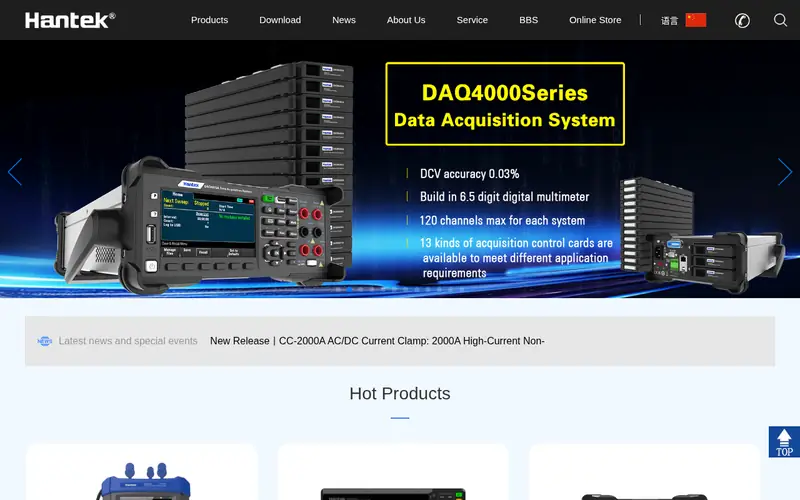
The HDG2000B series is Hantek's line of two-channel function and arbitrary waveform generators. Models in the series cover different maximum frequencies, so check the exact model number before buying. They support sine, square, triangle, pulse and arbitrary waveforms, plus modulation and sweep.
For hobbyists who want a step up from a bare-bones unit but cannot justify a Rigol or Siglent price, the series is worth a look. The instruments include a display for waveform preview and settings.
The catch is that specs vary across the series and documentation is thinner. Confirm the frequency range, sample rate and channel count for the specific model you order.
Where the price comes from
Check current retail price. Hardware prices move often, so check the Hantek HDG2000B series maker page or a retailer before you buy.
Benefits
- Two channels
- arbitrary waveform support
- lower cost than major bench brands
Drawbacks
- Varies by model in the series
- documentation is less detailed
Use case to skip: this limit matters to you: varies by model in the series.
Our take. A sensible pick for arbitrary waveforms on a budget.
If it does not fit, compare Rigol DG1022Z or Siglent SDG2042X in this list.

- Best for
- Lab-style features at mid range
- Standout
- Two channels
- Starting price
- Check current retail price
- Free plan or trial
- One-time hardware purchase
The XDG3000 series is OWON's line of two-channel function and arbitrary waveform generators. Models in the series differ in maximum frequency and sample rate, so confirm the exact variant. They support the standard waveform set plus arbitrary waveforms, modulation and sweep.
OWON instruments are common in education and small labs. The series offers a middle path between budget hobby units and premium bench brands, with a display and front-panel controls.
The catch is community support. Fewer hobbyists use OWON generators, so finding setup help online is harder than with Rigol or Siglent.
Where the price comes from
Check current retail price. Hardware prices move often, so check the OWON XDG3000 series maker page or a retailer before you buy.
Benefits
- Two channels
- arbitrary waveform memory
- modulation and sweep modes
Drawbacks
- Less common in hobby circles
- model specs vary
Use case to skip: this limit matters to you: less common in hobby circles.
Our take. A sensible pick for lab-style features at mid range.
If it does not fit, compare Rigol DG1022Z or Siglent SDG2042X in this list.
What specs matter most when buying a function generator?
Frequency range, channel count, sample rate and arbitrary waveform memory are the four specs that decide whether a generator fits your work. Frequency range sets the highest sine wave you can produce. Channel count decides whether you can combine or compare signals. Sample rate and vertical resolution shape how clean an arbitrary waveform looks.
For hobby work, 10 to 25 MHz sine coverage handles audio, filters and most digital clocking. Two channels are worth paying for if you ever need quadrature signals, phase comparison or summed outputs. Sample rate matters most for arbitrary waveforms: higher rates reproduce fast edges and complex shapes with less distortion.
Arbitrary waveform memory is often overlooked. A generator with deep memory can hold longer custom patterns, which helps with protocol testing and sensor emulation. Also check output amplitude range, DC offset, modulation modes and connectivity (USB, LAN). A touchscreen is a convenience, not a requirement.
Finally, check the datasheet for the exact model. Series names often cover several variants with different frequency limits, so the model number matters more than the family name.
Is a cheaper function generator good enough for hobby work?
Yes, for many hobby tasks a budget unit is enough. The FeelTech FY6900 covers basic sine, square and triangle signals for audio and logic testing at a very low price. If you need two channels and better build quality, the Rigol DG1022Z is the safer long-term pick.
Step up only when your work demands it. Higher bandwidth, deeper arbitrary waveform memory and calibrated amplitude accuracy are the usual reasons to spend more. The Siglent SDG2042X makes sense if you work near RF frequencies or need a touchscreen workflow. Otherwise, a mid-range or budget unit will handle most bench tasks.
Questions worth answering first
Buying checklist
- Confirm the exact model number, since series names often cover several frequency variants.
- Check the maximum sine frequency against the fastest signal you expect to generate.
- Decide whether you need one channel or two before comparing prices.
- Look up arbitrary waveform memory depth if you plan to load custom patterns.
- Verify the output amplitude range and DC offset meet your circuit needs.
- Check which connectivity options (USB, LAN) the specific model includes.
FAQ
What is the difference between a function generator and an arbitrary waveform generator?
A function generator produces standard shapes like sine, square and triangle. An arbitrary waveform generator can also output custom patterns loaded from memory or built on the instrument. Most modern benchtop units combine both functions, which is why the terms are often used together.
Do I need two channels on a function generator?
Two channels help when you need to combine signals, compare phase or drive a circuit with two inputs. For simple single-signal testing, one channel is enough. Two-channel models cost more, so decide based on the work you actually do.
What sample rate should I look for?
Higher sample rates reproduce fast edges and complex arbitrary waveforms more accurately. For audio and basic digital work, a modest rate is fine. For sharper pulses or RF-adjacent signals, look for a higher figure on the datasheet.
Can a function generator replace a signal generator?
Not always. Function generators focus on standard waveforms and arbitrary patterns. RF signal generators offer more precise frequency control and modulation for radio work. For hobby bench tasks, a function generator covers most needs.
Are budget function generators accurate enough for learning?
Yes, for learning and basic testing. Budget units may have looser amplitude accuracy and less stable output than bench brands. They are a reasonable first purchase if you accept those limits.
What should I check before buying a used function generator?
Check the model number against the vendor datasheet, confirm all channels work, and ask about calibration history. Look for missing accessories like power cords and output cables. Used bench brands can be good value if they are in good condition.
Sources we checked
Change log: First published 27 Nov 2026.