5 Best Hot Air Rework Stations in 2026
The Quick 861DW is the safest all-round pick for most repair benches: a 1,000 W station with a brushless blower, digital temperature and airflow control, and a wide nozzle range. If you want a well-documented brand with local service, look at the Hakko FR-810B. For tight budgets, the Atten ST-862D covers basic SMD work at a lower price.
 By Shihab Mia · Published 27 Nov 2026
We run no ads and no affiliate links at launch. The order of a list follows our published method. How lists are ordered: how we score.
Prices are the starting prices vendors list publicly. Plans change, so confirm the current price on the vendor page before you buy.
Key takeaways
- Hot air stations range from roughly 100 USD for budget units to over 1,000 USD for professional brands like JBC.
- Wattage matters less than airflow stability and nozzle fit; most SMD work needs 400 to 700 W.
- Closed-loop temperature control and a sleep or standby mode protect both the element and the board.
- Budget stations often ship with few nozzles, so budget for a nozzle kit.
- Check that spare heating elements and handles are sold separately before you buy.
Side-by-side
Grouped by fit and cost. Tap a product to jump to its full entry.
| Fit | Cost | |||
|---|---|---|---|---|
| Product | Best for | Standout feature | Listed starting price | Free plan or trial |
| 1Quick 861DW | General SMD repair | Brushless blower for steady airflow | Check current retail price | One-time hardware purchase |
| 2Hakko FR-810B | Brand-name reliability | Well-documented service and parts | Check current retail price | One-time hardware purchase |
| 3Atten ST-862D | Tight budgets | Low entry price | Check current retail price | One-time hardware purchase |
| 4JBC JTSE-2A | Professional benches | Precise closed-loop control | Check current retail price | One-time hardware purchase |
| 5Weller WTHA 1 | Mixed-brand workshops | Digital control | Check current retail price | One-time hardware purchase |
How we picked
We compared these stations using vendor product pages, published spec sheets and service documentation. We looked at temperature and airflow control type, nozzle compatibility, availability of spare handles and heating elements, and the vendor's published price or current retail listings. We did not run hands-on lab tests. Where a vendor does not publish a figure, we describe the feature qualitatively rather than guess.
The 5 picks in detail
- Best for
- General SMD repair
- Standout
- Brushless blower for steady airflow
- Starting price
- Check current retail price
- Free plan or trial
- One-time hardware purchase
The Quick 861DW is a 1,000 W hot air station with a brushless blower and digital controls for temperature and airflow. The vendor lists a temperature range that covers typical lead-free SMD work, and the handle uses standard Quick nozzles, which are widely available. It has become a common reference point on repair benches because the airflow stays steady at low settings, which matters for small packages.
It suits technicians doing general board repair, connector rework and small BGA work. The main catch is that the box is fairly large and the bundled nozzle set is limited, so most buyers add a nozzle kit. Spare heating elements and handles are sold as service parts.
Where the price comes from
Check current retail price. Hardware prices move often, so check the Quick 861DW maker page or a retailer before you buy.
Benefits
- Brushless blower for steady airflow
- digital temperature and airflow control
- wide nozzle availability
Drawbacks
- Nozzles often sold separately
- larger footprint than compact units
Use case to skip: this limit matters to you: nozzles often sold separately.
Our take. A sensible pick for general SMD repair.
If it does not fit, compare Hakko FR-810B or Atten ST-862D in this list.
- Best for
- Brand-name reliability
- Standout
- Well-documented service and parts
- Starting price
- Check current retail price
- Free plan or trial
- One-time hardware purchase
The Hakko FR-810B is a professional hot air station from a brand with a long service history in soldering. The vendor documents temperature control, nozzle options and spare parts clearly, which helps buyers plan long-term ownership. It is aimed at repair shops and production rework benches that want predictable behaviour and easy access to consumables.
The catch is price and airflow control. Some variants run at a fixed airflow, so fine work depends more on nozzle choice and distance than on dialling the blower down. For buyers who value documented service and local distributors over adjustable airflow, it is a solid choice.
Where the price comes from
Check current retail price. Hardware prices move often, so check the Hakko FR-810B maker page or a retailer before you buy.
Benefits
- Well-documented service and parts
- precise digital temperature setting
- strong distributor support
Drawbacks
- Higher price than budget units
- airflow is fixed rather than adjustable on some variants
Use case to skip: this limit matters to you: higher price than budget units.
Our take. A sensible pick for brand-name reliability.
If it does not fit, compare Quick 861DW or Atten ST-862D in this list.
- Best for
- Tight budgets
- Standout
- Low entry price
- Starting price
- Check current retail price
- Free plan or trial
- One-time hardware purchase
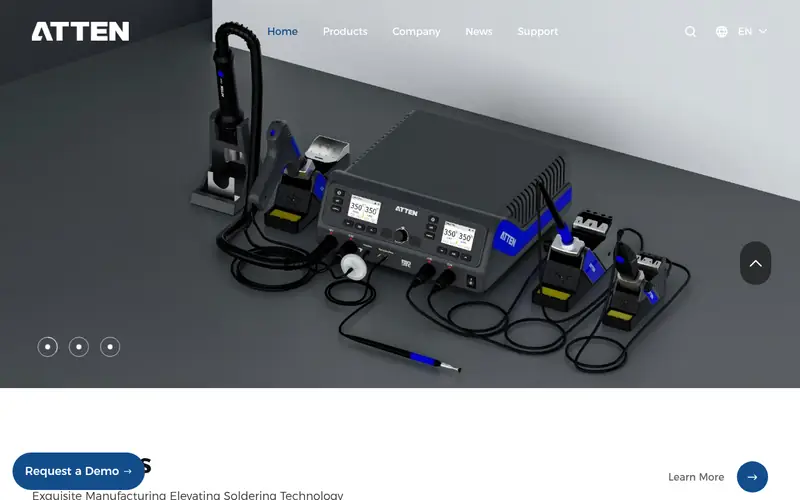
The Atten ST-862D is a compact digital hot air station aimed at hobbyists and small shops. It offers adjustable temperature and airflow with a digital readout, in a smaller footprint than the Quick unit. The vendor lists it as suitable for SMD rework, shrink tubing and general heating tasks.
It suits beginners and low-volume repair. The main catch is regional parts support: heating elements and handles are available, but stock depends on the distributor. Buyers should confirm nozzle compatibility before ordering a kit.
Where the price comes from
Check current retail price. Hardware prices move often, so check the Atten ST-862D maker page or a retailer before you buy.
Benefits
- Low entry price
- digital display
- compact body
Drawbacks
- Fewer bundled nozzles
- parts availability varies by region
Use case to skip: this limit matters to you: fewer bundled nozzles.
Our take. A sensible pick for tight budgets.
If it does not fit, compare Quick 861DW or Hakko FR-810B in this list.
- Best for
- Professional benches
- Standout
- Precise closed-loop control
- Starting price
- Check current retail price
- Free plan or trial
- One-time hardware purchase
The JBC JTSE-2A is a high-end hot air station from a Spanish manufacturer known for soldering and rework tools. The vendor documents closed-loop temperature control, a range of nozzles and stands, and service parts. It is built for daily professional use where repeatability matters.
It suits repair businesses and labs that already use JBC tools and want a matching hot air station. The catch is cost: it sits well above budget and mid-range units, and the accessories add up. For occasional hobby work, the price is hard to justify.
Where the price comes from
Check current retail price. Hardware prices move often, so check the JBC JTSE-2A maker page or a retailer before you buy.
Benefits
- Precise closed-loop control
- strong build quality
- broad accessory range
Drawbacks
- High price
- overkill for occasional hobby use
Use case to skip: this limit matters to you: high price.
Our take. A sensible pick for professional benches.
If it does not fit, compare Quick 861DW or Hakko FR-810B in this list.
- Best for
- Mixed-brand workshops
- Standout
- Digital control
- Starting price
- Check current retail price
- Free plan or trial
- One-time hardware purchase
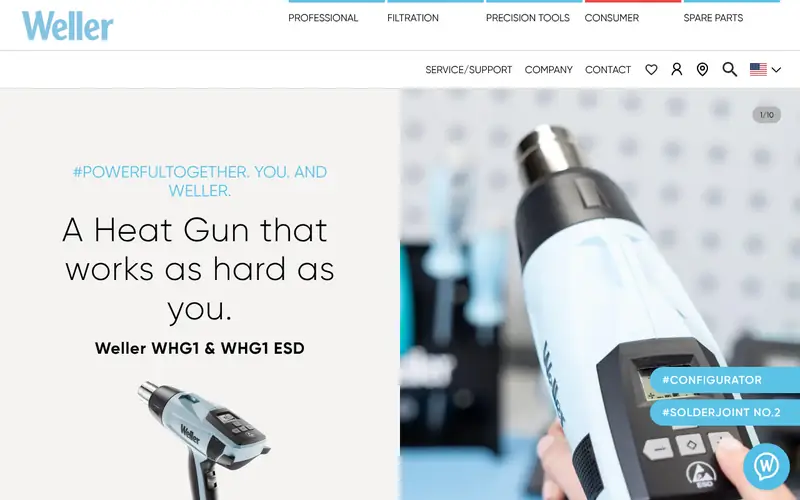
The Weller WTHA 1 is a digital hot air station from a long-established soldering brand. The vendor lists adjustable temperature and airflow, a digital display and a compact body. It fits workshops that already standardise on Weller irons and want one brand for consumables and support.
It suits general repair and light production rework. The catch is that the nozzle and accessory range is smaller than some competitors, so specialised nozzles may be harder to source. Check the vendor's accessory list before buying for a specific package size.
Where the price comes from
Check current retail price. Hardware prices move often, so check the Weller WTHA 1 maker page or a retailer before you buy.
Benefits
- Digital control
- well-known brand with distributor network
- compact design
Drawbacks
- Accessory range smaller than some rivals
- price sits mid to high
Use case to skip: this limit matters to you: accessory range smaller than some rivals.
Our take. A sensible pick for mixed-brand workshops.
If it does not fit, compare Quick 861DW or Hakko FR-810B in this list.
What specs matter most when buying a hot air rework station?
The three that matter most are temperature control type, airflow behaviour and nozzle compatibility. Closed-loop control keeps the set temperature stable as air flows, which protects both the element and the board. Airflow should stay steady at low settings, because most damage comes from blasting small parts off the board.
Wattage is a rough guide, not a ranking. A 700 W station with stable airflow often works better on small packages than a higher-wattage unit with a coarse blower. Look for a brushless blower if you plan long sessions, and check whether the station has a sleep or standby mode so the handle cools when idle.
Nozzle fit is the spec buyers overlook. Confirm the handle takes standard nozzles in the sizes you need, and check that spare heating elements and handles are sold as service parts. A station with no spare parts is a disposable tool.
Which hot air station should I buy if I mostly repair phones?
Both offer fine airflow control, which matters on dense boards with shields and small ICs.
If you run a shop and want documented service and local parts, the Hakko FR-810B or JBC JTSE-2A are the safer long-term buys, at a higher price.
Questions worth answering first
Buying checklist
- Confirm the station's temperature range covers lead-free solder work.
- Check that the handle takes nozzles in the sizes you actually use.
- Verify spare heating elements and handles are sold by the vendor or a distributor.
- Decide whether you need adjustable airflow or a fixed-flow unit is enough.
- Check the warranty length and who honours it in your region.
- Read the vendor's manual online to confirm the controls suit your workflow.
FAQ
Do I need a hot air station if I already have a soldering iron?
Yes, for SMD removal and reflow work. An iron cannot heat a whole package evenly, so hot air is the standard tool for removing ICs, connectors and small BGAs. Many technicians keep both on the bench and use the iron for joints and the hot air for removal.
Is a cheap hot air station good enough for learning SMD work?
Yes, for practice on scrap boards. Move to a station with finer airflow control once you start working on boards you care about.
What temperature should I set for lead-free SMD rework?
Most lead-free work sits in a range around 350 to 400 C at the nozzle, adjusted for board mass and airflow. Start lower and raise gradually. The exact setting depends on the board and the paste or alloy, so check the solder manufacturer's data.
Do hot air stations need special nozzles?
Yes, nozzle choice affects heat focus and airflow. Small nozzles concentrate heat for tiny packages, while wider nozzles suit connectors and larger parts. Confirm the handle takes standard nozzles before buying a kit.
Can a hot air station damage nearby components?
Yes, if airflow is too high or heat is applied too long. Low, steady airflow and a nozzle that fits the package reduce the risk. Shields and heat-sensitive parts may need kapton tape or a heat shield.
What is the difference between a hot air station and a rework station?
A hot air station provides heated air only. A rework station usually combines hot air with a soldering iron, and sometimes a preheater, in one unit. Separate tools are common on professional benches because each can be replaced independently.
Sources we checked
Change log: First published 27 Nov 2026.