6 Best RAID Controller Cards for SATA, SAS and NVMe in 2026
The Broadcom MegaRAID 9670W-16i is the top pick for most buyers who need a modern tri-mode card, because it handles SAS, SATA and NVMe drives on one controller with a x16 host link. If you want a lower-cost SAS and SATA card for a storage server, look at the Broadcom MegaRAID 9560-8i.
 By Shihab Mia · Published 27 Nov 2026
We run no ads and no affiliate links at launch. The order of a list follows our published method. How lists are ordered: how we score.
Prices are the starting prices vendors list publicly. Plans change, so confirm the current price on the vendor page before you buy.
Key takeaways
- Tri-mode cards (SAS, SATA, NVMe) cost more than SAS/SATA-only cards, so buy tri-mode only if you plan to add NVMe later.
- Broadcom MegaRAID cards use the storcli and LSI/Avago tooling that most server admins already know.
- Microchip Adaptec SmartRAID cards include maxCache and are managed with the maxView Storage Manager tool.
- HighPoint cards are aimed at workstations and small servers, often with lower list prices than enterprise MegaRAID parts.
- Check the host interface and lane count first: a x8 card in a x4 slot will bottleneck the drives.
Side-by-side
Grouped by fit and cost. Tap a product to jump to its full entry.
| Fit | Cost | |||
|---|---|---|---|---|
| Product | Best for | Standout feature | Listed starting price | Free plan or trial |
| 1Broadcom MegaRAID 9670W-16i | Tri-mode SAS, SATA and NVMe arrays | Supports SAS, SATA and NVMe drives on one card | Check current retail price (enterprise tri-mode card) | One-time hardware purchase |
| 2Broadcom MegaRAID 9560-8i | Cost-focused SAS and SATA arrays | Eight internal SAS/SATA ports | Check current retail price (8-port SAS/SATA card) | One-time hardware purchase |
| 3Broadcom MegaRAID 9560-16i | Dense SAS and SATA arrays | Sixteen internal SAS/SATA ports | Check current retail price (16-port SAS/SATA card) | One-time hardware purchase |
| 4Microchip Adaptec SmartRAID 3254-16i | Mixed SAS and SATA with cache | Sixteen internal ports | Check current retail price (16-port SmartRAID card) | One-time hardware purchase |
| 5Microchip Adaptec SmartRAID 3154-8i | Entry SAS and SATA servers | Eight internal ports | Check current retail price (8-port SmartRAID card) | One-time hardware purchase |
| 6HighPoint RocketRAID 3740A | SATA and SAS workstation RAID | SATA and SAS support | Check current retail price (SATA/SAS RAID card) | One-time hardware purchase |
How we picked
We compared these cards from vendor documentation and public sources. That means Broadcom, Microchip and HighPoint product pages, datasheets and management software documentation, plus published prices where the vendor lists them. We checked drive support, host interface, port count, cache options and management tools for each model. We did not run hands-on lab tests, so performance figures here come from vendor specifications rather than our own measurements. Prices move with the channel, so treat every figure as a starting point and confirm it before you buy.
The 6 picks in detail

- Best for
- Tri-mode SAS, SATA and NVMe arrays
- Standout
- Supports SAS, SATA and NVMe drives on one card
- Starting price
- Check current retail price (enterprise tri-mode card)
- Free plan or trial
- One-time hardware purchase
The 9670W-16i is a tri-mode MegaRAID card, meaning it can attach SAS, SATA and NVMe drives. Broadcom lists a PCIe 4.0 x16 host interface and 16 internal ports. It uses the MegaRAID firmware and storcli command line tool, so existing Broadcom shops can keep their monitoring and scripts.
It suits a server build where you want one controller for a mixed drive set, for example SAS hard drives for bulk storage plus NVMe for cache or fast volumes. The card is a full-height, full-length part, so check clearance and airflow in a rack chassis.
The main catch is price and platform requirements. This is an enterprise part, and the board, cabling and drive backplane need to match. Confirm the exact port and cable kit with the vendor before ordering.
Where the price comes from
Check current retail price (enterprise tri-mode card). Hardware prices move often, so check the Broadcom MegaRAID 9670W-16i maker page or a retailer before you buy.
Benefits
- Supports SAS, SATA and NVMe drives on one card
- PCIe 4.0 x16 host interface
- managed with Broadcom storcli and MegaRAID tooling
Drawbacks
- High cost
- needs a server board with a free x16 slot and good airflow
Use case to skip: this limit matters to you: high cost.
Our take. A sensible pick for tri-mode SAS, SATA and NVMe arrays.
If it does not fit, compare Broadcom MegaRAID 9560-8i or Broadcom MegaRAID 9560-16i in this list.
- Best for
- Cost-focused SAS and SATA arrays
- Standout
- Eight internal SAS/SATA ports
- Starting price
- Check current retail price (8-port SAS/SATA card)
- Free plan or trial
- One-time hardware purchase
The 9560-8i is a SAS and SATA MegaRAID card with eight internal ports and a PCIe 4.0 host interface. It does not handle NVMe drives, which keeps the price below tri-mode parts. It is the sensible choice when your array is built from SAS or SATA drives and you do not expect to add NVMe behind the controller.
It uses the same storcli and MegaRAID management software as the rest of the line, so monitoring, firmware updates and array rebuilds follow a familiar process. Broadcom lists cache protection options separately, so check whether the kit you buy includes a battery or supercapacitor module.
The catch is future headroom. If you plan to move to NVMe drives later, this card cannot follow you, and you would need a tri-mode replacement. For a pure SAS and SATA server, though, it is a well understood part with wide documentation.
Where the price comes from
Check current retail price (8-port SAS/SATA card). Hardware prices move often, so check the Broadcom MegaRAID 9560-8i maker page or a retailer before you buy.
Benefits
- Eight internal SAS/SATA ports
- PCIe 4.0 host interface
- same MegaRAID management tools as higher models
Drawbacks
- No NVMe support
- cache and battery options add cost
Use case to skip: this limit matters to you: no NVMe support.
Our take. A sensible pick for cost-focused SAS and SATA arrays.
If it does not fit, compare Broadcom MegaRAID 9670W-16i or Broadcom MegaRAID 9560-16i in this list.
- Best for
- Dense SAS and SATA arrays
- Standout
- Sixteen internal SAS/SATA ports
- Starting price
- Check current retail price (16-port SAS/SATA card)
- Free plan or trial
- One-time hardware purchase
The 9560-16i doubles the port count of the 8-port model. Sixteen internal SAS/SATA ports let you cable a larger drive set directly, which can remove an expander from a mid-size build. It uses the same PCIe 4.0 host interface and MegaRAID firmware family.
It suits a storage server with many SAS or SATA drives where direct cabling is simpler to troubleshoot than an expander topology. The management story is the same as the rest of the MegaRAID line, with storcli and the MegaRAID software stack.
The catch is that more ports do not mean more speed. The host link and the drives set the ceiling, and a x8 slot will limit throughput. Check your chassis backplane and cable kit before you commit, and confirm cache protection is included in the SKU you order.
Where the price comes from
Check current retail price (16-port SAS/SATA card). Hardware prices move often, so check the Broadcom MegaRAID 9560-16i maker page or a retailer before you buy.
Benefits
- Sixteen internal SAS/SATA ports
- PCIe 4.0 host interface
- reduces the need for an expander in mid-size builds
Drawbacks
- Higher price than the 8-port model
- still no NVMe support
Use case to skip: this limit matters to you: higher price than the 8-port model.
Our take. A sensible pick for dense SAS and SATA arrays.
If it does not fit, compare Broadcom MegaRAID 9670W-16i or Broadcom MegaRAID 9560-8i in this list.

- Best for
- Mixed SAS and SATA with cache
- Standout
- Sixteen internal ports
- Starting price
- Check current retail price (16-port SmartRAID card)
- Free plan or trial
- One-time hardware purchase
The SmartRAID 3254-16i is a Microchip Adaptec card for SAS and SATA drives with sixteen internal ports. It supports the SmartRAID feature set, including cache and the maxCache read and write caching feature, and it is managed with the maxView Storage Manager tool.
It suits buyers who want a large direct-attached SAS/SATA array and value the Adaptec management interface. Microchip documents the card in its SmartRAID family datasheets, so check the exact port, cache and battery options for the SKU you order.
The catch is that cache protection is an option, not a default. A card without a battery or capacitor module may run in write-through mode, which affects write performance. Confirm the module and the firmware level with the vendor before you buy.
Where the price comes from
Check current retail price (16-port SmartRAID card). Hardware prices move often, so check the Microchip Adaptec SmartRAID 3254-16i maker page or a retailer before you buy.
Benefits
- Sixteen internal ports
- SmartRAID cache and maxCache support
- managed with maxView Storage Manager
Drawbacks
- No NVMe support
- cache module and battery sold as options
Use case to skip: this limit matters to you: no NVMe support.
Our take. A sensible pick for mixed SAS and SATA with cache.
If it does not fit, compare Broadcom MegaRAID 9670W-16i or Broadcom MegaRAID 9560-8i in this list.
- Best for
- Entry SAS and SATA servers
- Standout
- Eight internal ports
- Starting price
- Check current retail price (8-port SmartRAID card)
- Free plan or trial
- One-time hardware purchase
The SmartRAID 3154-8i is the smaller sibling in the SmartRAID line, with eight internal ports for SAS and SATA drives. It uses the same maxView Storage Manager software, so the management experience matches the larger cards.
It suits a small server or a workstation build where eight drives is enough and the budget is tighter than for a 16-port part. Microchip lists the card in its SmartRAID documentation, and the port count and host interface should be confirmed against the current datasheet.
The catch is the same as other SAS/SATA cards: no NVMe support, and cache protection is a separate option. If you expect to grow past eight drives, price the 16-port model before you buy, because adding a second card later costs more than buying the larger one now.
Where the price comes from
Check current retail price (8-port SmartRAID card). Hardware prices move often, so check the Microchip Adaptec SmartRAID 3154-8i maker page or a retailer before you buy.
Benefits
- Eight internal ports
- lower entry point into SmartRAID
- maxView Storage Manager support
Drawbacks
- No NVMe support
- fewer ports than the 16-port model
Use case to skip: this limit matters to you: no NVMe support.
Our take. A sensible pick for entry SAS and SATA servers.
If it does not fit, compare Broadcom MegaRAID 9670W-16i or Broadcom MegaRAID 9560-8i in this list.
- Best for
- SATA and SAS workstation RAID
- Standout
- SATA and SAS support
- Starting price
- Check current retail price (SATA/SAS RAID card)
- Free plan or trial
- One-time hardware purchase
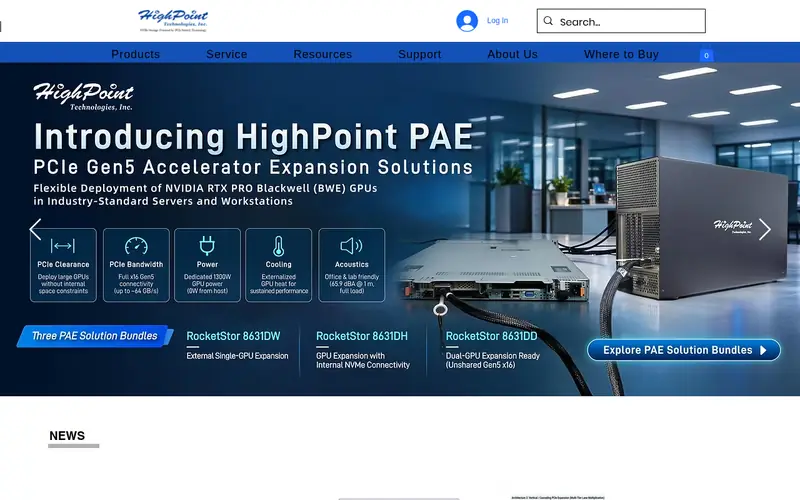
The RocketRAID 3740A is a HighPoint card for SATA and SAS drives in workstation and small server builds.
It suits a workstation or a small file server where the drives are SATA or SAS and the budget does not stretch to an enterprise MegaRAID or SmartRAID part. HighPoint documents the card on its site, and the management software is the same family used across the RocketRAID line.
The catch is ecosystem size. Broadcom and Microchip have wider server validation and more third-party documentation, which matters in a production environment. For a workstation, the HighPoint card can be a reasonable lower-cost option, but confirm the port count and host interface in the current datasheet.
Where the price comes from
Check current retail price (SATA/SAS RAID card). Hardware prices move often, so check the HighPoint RocketRAID 3740A maker page or a retailer before you buy.
Benefits
- SATA and SAS support
- aimed at workstation builds
- HighPoint management software
Drawbacks
- No NVMe support
- smaller ecosystem than Broadcom or Microchip
Use case to skip: this limit matters to you: no NVMe support.
Our take. A sensible pick for SATA and SAS workstation RAID.
If it does not fit, compare Broadcom MegaRAID 9670W-16i or Broadcom MegaRAID 9560-8i in this list.
What specs matter most when buying a RAID controller card?
The three specs that matter most are drive support (SAS, SATA, NVMe or tri-mode), host interface and lane count, and cache protection. Get those wrong and the card either will not fit your build or will not deliver the performance you expect.
Drive support comes first. A SAS/SATA card cannot attach NVMe drives, and a tri-mode card costs more. Decide whether NVMe is in your near-term plan before you compare prices. Next, check the host interface: a PCIe 4.0 x8 card needs a x8 slot, and a x16 tri-mode card needs a x16 slot with enough lanes from the CPU or chipset. A card in a narrower slot will run below its rated throughput.
Cache protection is the third factor. Many RAID cards ship without a battery or supercapacitor module, and without one the card may run in write-through mode. If write performance matters, price the cache module into the total. Also check the management software (storcli for Broadcom, maxView for Microchip, HighPoint's own tool), the port count and cable kit, and the card's physical size and airflow needs in your chassis.
Which RAID controller card should I buy if I only have SATA drives?
Buy a SAS/SATA card rather than a tri-mode part. The Broadcom MegaRAID 9560-8i is the pick for most SATA-only builds, and the Microchip Adaptec SmartRAID 3154-8i is the alternative if you prefer the Adaptec management tools.
A tri-mode card adds cost you will not use if every drive is SATA. The 9560-8i gives you eight internal ports and the MegaRAID tooling, and the 3154-8i gives you eight ports with maxView. If you need more than eight drives, step up to the 9560-16i or the SmartRAID 3254-16i. Only move to a tri-mode card like the 9670W-16i if you expect to add NVMe drives behind the same controller later.
Questions worth answering first
Buying checklist
- Confirm the card supports the drive type you own (SAS, SATA, NVMe or tri-mode).
- Check the host interface and lane count against a free slot on your motherboard.
- Confirm the port count and that the right cable kit is included or available.
- Check whether cache protection (battery or supercapacitor) is included in the SKU.
- Verify the card's physical size and airflow needs fit your chassis.
- Confirm the management software and firmware level with the vendor before ordering.
FAQ
Do I need a hardware RAID card or is software RAID enough?
Software RAID (for example Linux mdraid or Windows Storage Spaces) is free and fine for many workstation and small server builds. A hardware RAID card adds its own processor, cache and battery option, which can help with write performance and boot support. Buy hardware RAID when you need cache protection or a bootable array the OS does not manage.
Can a tri-mode RAID card run SATA, SAS and NVMe drives at the same time?
Yes, a tri-mode card like the Broadcom MegaRAID 9670W-16i is designed to attach SAS, SATA and NVMe drives. Check the vendor datasheet for the exact mix and port configuration, because cabling and backplane support vary by chassis. Not every port may support every drive type.
Is a RAID controller card worth it for a home server?
It can be, if you want cache protection or a bootable array. For a simple home file server, software RAID is often enough and costs nothing. A hardware card makes more sense when you need many drives, a battery-backed cache, or a controller the OS does not have to manage.
What is the difference between Broadcom MegaRAID and Microchip Adaptec SmartRAID?
Both are enterprise RAID lines with their own management software. Broadcom uses storcli and the MegaRAID tooling, and Microchip uses maxView Storage Manager. Feature sets differ by model, so compare the datasheet for the specific card rather than the brand. Both offer SAS and SATA cards, and Broadcom also sells tri-mode parts.
Do RAID controller cards need a battery?
Not always, but a battery or supercapacitor module enables write-back cache, which improves write performance. Without one, many cards run in write-through mode. Check whether the module is included in the SKU you buy, because it is often a separate option.
Can I boot from a RAID controller card?
Many server RAID cards support booting from a configured array, but support depends on the card, the firmware and the motherboard. Check the vendor documentation for boot support and the required settings before you rely on it for your system drive.
Sources we checked
Change log: First published 27 Nov 2026.