7 Best 1440p Gaming Monitors in 2026
The LG 27GR83Q is the strongest all-round pick for most buyers: a 27-inch 1440p IPS panel with a 240Hz refresh rate and wide input support. If you want a larger, more immersive screen, look at the 32-inch Samsung Odyssey G65B. If budget is the priority, the Dell G2724D offers a solid 165Hz 1440p IPS package for less.
 By Shihab Mia · Published 22 Nov 2026
We run no ads and no affiliate links at launch. The order of a list follows our published method. How lists are ordered: how we score.
Prices are the starting prices vendors list publicly. Plans change, so confirm the current price on the vendor page before you buy.
Key takeaways
- 1440p at 27 inches gives a sharp image without the GPU load of 4K.
- 240Hz panels suit competitive shooters; 165Hz to 180Hz is enough for most players.
- IPS gives the best colour and viewing angles, VA gives deeper blacks, OLED gives the fastest response.
- Check the port list: DisplayPort is usually needed to reach the top refresh rate.
- Prices below are manufacturer list prices; check current retail price before buying.
Side-by-side
Grouped by fit and cost. Tap a product to jump to its full entry.
| Fit | Cost | |||
|---|---|---|---|---|
| Product | Best for | Standout feature | Listed starting price | Free plan or trial |
| 1LG 27GR83Q | All-round 240Hz 1440p gaming | 240Hz refresh rate | Check current retail price | One-time hardware purchase |
| 2Samsung Odyssey G65B | Curved 32-inch immersion | 32-inch 1000R curved VA panel | Check current retail price | One-time hardware purchase |
| 3Dell G2724D | Budget 165Hz IPS gaming | 165Hz IPS panel at a lower price | Check current retail price | One-time hardware purchase |
| 4ASUS ROG Swift PG27AQDM | OLED contrast and motion clarity | 27-inch 1440p OLED panel | Check current retail price | One-time hardware purchase |
| 5Gigabyte M27Q X | Value 240Hz with a built-in KVM | 240Hz IPS panel | Check current retail price | One-time hardware purchase |
| 6MSI MAG 274QRF QD E2 | Quantum dot colour at 180Hz | Quantum dot IPS panel | Check current retail price | One-time hardware purchase |
| 7AOC Q27G3XMN | Mini-LED HDR on a budget | Mini-LED backlight with local dimming | Check current retail price | One-time hardware purchase |
How we picked
This guide is based on research, not lab testing. We reviewed vendor product pages, published spec sheets and official documentation for each model, then compared panel type, refresh rate, resolution, port lists and listed features. We limited the list to 1440p monitors released between 2023 and 2025 that vendors still list as current. Prices are shown as "check current retail price" because retail pricing moves often. The ranking weighs refresh rate, panel strengths and the practical trade-offs each spec sheet reveals.
The 7 picks in detail

- Best for
- All-round 240Hz 1440p gaming
- Standout
- 240Hz refresh rate
- Starting price
- Check current retail price
- Free plan or trial
- One-time hardware purchase
The LG 27GR83Q is a 27-inch 1440p IPS monitor with a 240Hz refresh rate and a 1ms grey-to-grey response figure on the vendor spec sheet. It supports both DisplayPort and HDMI, and LG lists adaptive sync support for tear-free play.
It suits players who want one screen for fast shooters and everyday desktop work. The IPS panel keeps colours stable off-axis, which helps for multi-window use. The catch is modest HDR: brightness is not high enough for a convincing HDR experience, so treat that feature as a bonus.
Where the price comes from
Check current retail price. Hardware prices move often, so check the LG 27GR83Q maker page or a retailer before you buy.
Benefits
- 240Hz refresh rate
- IPS panel with wide viewing angles
- USB hub and headphone output
Drawbacks
- Stand is fairly basic
- HDR performance is limited
Use case to skip: this limit matters to you: stand is fairly basic.
Our take. A sensible pick for all-round 240Hz 1440p gaming.
If it does not fit, compare Samsung Odyssey G65B or Dell G2724D in this list.
- Best for
- Curved 32-inch immersion
- Standout
- 32-inch 1000R curved VA panel
- Starting price
- Check current retail price
- Free plan or trial
- One-time hardware purchase
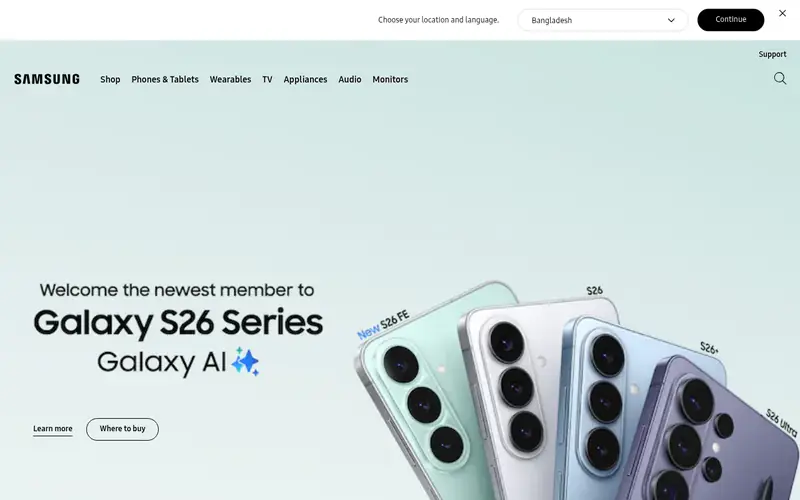
The Odyssey G65B is a 32-inch 1440p VA monitor with a 1000R curve and a 240Hz refresh rate. Samsung lists HDR600 support and built-in smart platform apps, so it can double as a streaming screen without a PC.
The curve wraps the image around your view, which many players find immersive at this size. VA contrast is strong for dark rooms. The trade-off is slower dark-scene transitions than IPS or OLED, and the aggressive curve takes adjustment for desktop work.
Where the price comes from
Check current retail price. Hardware prices move often, so check the Samsung Odyssey G65B maker page or a retailer before you buy.
Benefits
- 32-inch 1000R curved VA panel
- 240Hz refresh rate
- smart TV apps built in
Drawbacks
- VA black smearing in dark scenes
- curve is not for everyone
Use case to skip: this limit matters to you: VA black smearing in dark scenes.
Our take. A sensible pick for curved 32-inch immersion.
If it does not fit, compare LG 27GR83Q or Dell G2724D in this list.
- Best for
- Budget 165Hz IPS gaming
- Standout
- 165Hz IPS panel at a lower price
- Starting price
- Check current retail price
- Free plan or trial
- One-time hardware purchase
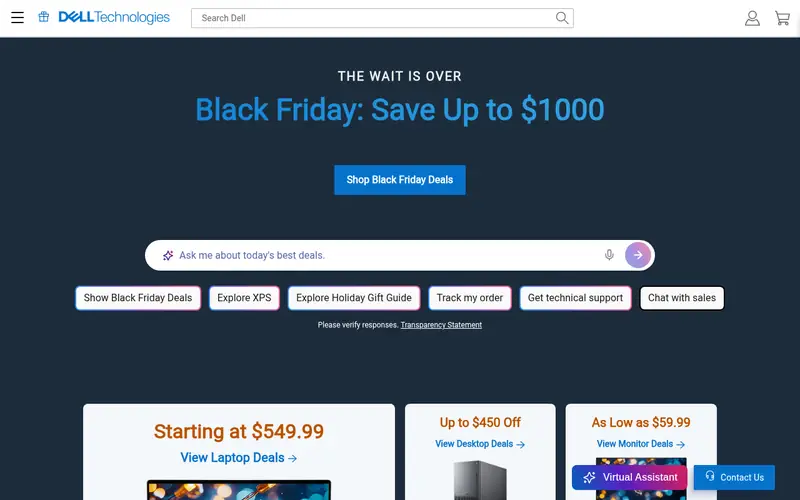
The Dell G2724D is a 27-inch 1440p IPS monitor with a 165Hz refresh rate. Dell lists a 1ms grey-to-grey response and adaptive sync support, plus DisplayPort and HDMI inputs.
It is the sensible pick for buyers who want good colour and a fast-enough refresh rate without paying for 240Hz. The stand adjusts for height, tilt and swivel, which is uncommon at this price. The main catch is the lack of a USB hub and only basic HDR.
Where the price comes from
Check current retail price. Hardware prices move often, so check the Dell G2724D maker page or a retailer before you buy.
Benefits
- 165Hz IPS panel at a lower price
- clean, adjustable stand
- solid port selection
Drawbacks
- No USB hub
- HDR is basic
Use case to skip: this limit matters to you: no USB hub.
Our take. A sensible pick for budget 165Hz IPS gaming.
If it does not fit, compare LG 27GR83Q or Samsung Odyssey G65B in this list.

- Best for
- OLED contrast and motion clarity
- Standout
- 27-inch 1440p OLED panel
- Starting price
- Check current retail price
- Free plan or trial
- One-time hardware purchase
The ROG Swift PG27AQDM uses a 27-inch 1440p OLED panel at 240Hz. ASUS lists very low response times and per-pixel dimming, which gives deep blacks and strong contrast in dark scenes.
This is the pick for buyers who prioritise motion clarity and image depth and will pay for it. OLED response is faster than any LCD here. The catch is price and the need to manage static elements like taskbars to reduce burn-in risk over long sessions.
Where the price comes from
Check current retail price. Hardware prices move often, so check the ASUS ROG Swift PG27AQDM maker page or a retailer before you buy.
Benefits
- 27-inch 1440p OLED panel
- 240Hz refresh rate
- very fast pixel response
Drawbacks
- High price
- static-image burn-in risk
Use case to skip: this limit matters to you: high price.
Our take. A sensible pick for OLED contrast and motion clarity.
If it does not fit, compare LG 27GR83Q or Samsung Odyssey G65B in this list.
- Best for
- Value 240Hz with a built-in KVM
- Standout
- 240Hz IPS panel
- Starting price
- Check current retail price
- Free plan or trial
- One-time hardware purchase
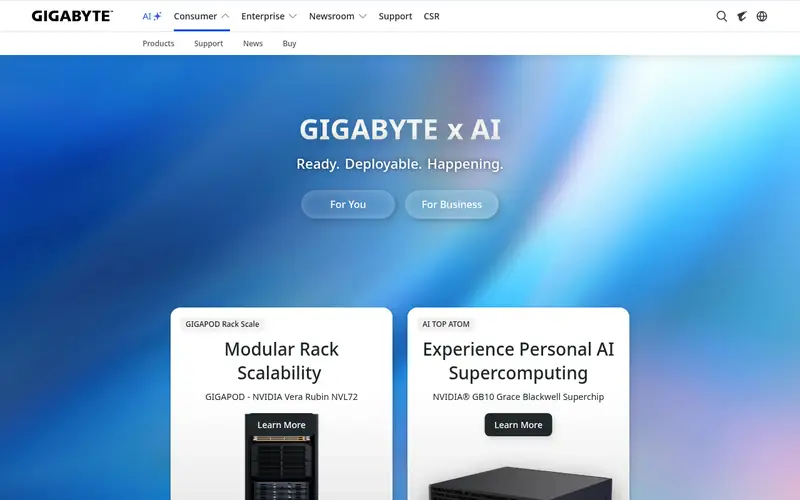
The Gigabyte M27Q X is a 27-inch 1440p IPS monitor with a 240Hz refresh rate. Gigabyte lists a built-in KVM switch, so one keyboard and mouse can control two connected computers.
That KVM makes it useful for people who mix a work laptop and a gaming PC on one desk. Ports include DisplayPort, HDMI and USB. The catch is the stand, which has less height and pivot adjustment than premium models, and HDR that is best described as entry level.
Where the price comes from
Check current retail price. Hardware prices move often, so check the Gigabyte M27Q X maker page or a retailer before you buy.
Benefits
- 240Hz IPS panel
- built-in KVM switch
- good port count
Drawbacks
- Stand offers limited adjustment
- HDR is modest
Use case to skip: this limit matters to you: stand offers limited adjustment.
Our take. A sensible pick for value 240Hz with a built-in KVM.
If it does not fit, compare LG 27GR83Q or Samsung Odyssey G65B in this list.

- Best for
- Quantum dot colour at 180Hz
- Standout
- Quantum dot IPS panel
- Starting price
- Check current retail price
- Free plan or trial
- One-time hardware purchase
The MSI MAG 274QRF QD E2 is a 27-inch 1440p monitor using a quantum dot IPS panel at 180Hz. MSI lists wide colour gamut coverage, which suits buyers who care about saturation for games and media.
It sits between budget 165Hz screens and 240Hz models. For most players 180Hz is a clear step up from 60Hz without the premium of a 240Hz panel. The catch is that it will not match the fastest esports screens, and HDR brightness is modest.
Where the price comes from
Check current retail price. Hardware prices move often, so check the MSI MAG 274QRF QD E2 maker page or a retailer before you buy.
Benefits
- Quantum dot IPS panel
- 180Hz refresh rate
- wide colour coverage per vendor
Drawbacks
- Below 240Hz
- HDR is limited
Use case to skip: this limit matters to you: below 240Hz.
Our take. A sensible pick for quantum dot colour at 180Hz.
If it does not fit, compare LG 27GR83Q or Samsung Odyssey G65B in this list.
- Best for
- Mini-LED HDR on a budget
- Standout
- Mini-LED backlight with local dimming
- Starting price
- Check current retail price
- Free plan or trial
- One-time hardware purchase
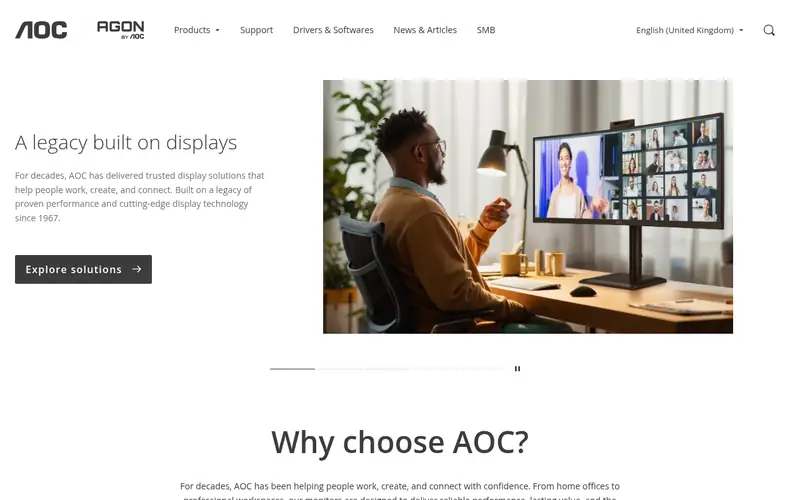
The AOC Q27G3XMN is a 27-inch 1440p VA monitor with a mini-LED backlight and 180Hz refresh rate. AOC lists local dimming zones and HDR1000 certification, which is unusual at this price.
It is the pick for buyers who want bright, high-contrast HDR in games and films. The mini-LED backlight lifts peak brightness well above typical edge-lit LCDs. The catch is VA behaviour: dark-scene motion can smear, and viewing angles are narrower than IPS.
Where the price comes from
Check current retail price. Hardware prices move often, so check the AOC Q27G3XMN maker page or a retailer before you buy.
Benefits
- Mini-LED backlight with local dimming
- 180Hz refresh rate
- strong HDR for the price
Drawbacks
- VA panel has slower dark transitions
- limited viewing angles
Use case to skip: this limit matters to you: VA panel has slower dark transitions.
Our take. A sensible pick for mini-LED HDR on a budget.
If it does not fit, compare LG 27GR83Q or Samsung Odyssey G65B in this list.
What specs matter when you buy
Resolution and size come first. 1440p at 27 inches gives roughly 109 pixels per inch, which looks sharp at normal desk distance. At 32 inches the same resolution is slightly softer but more immersive. Do not buy 1440p at 24 inches unless you specifically want very high pixel density.
Refresh rate is the next decision. 165Hz to 180Hz is a clear improvement over 60Hz for most players. 240Hz helps in fast competitive shooters, but only if your GPU can push high frame rates at 1440p. Pair a high refresh rate with adaptive sync so the monitor matches the GPU's output and avoids tearing.
Panel type shapes the trade-offs. IPS gives accurate colour and wide viewing angles. VA gives deeper blacks but slower dark transitions. OLED gives the fastest response and best contrast but costs more and carries burn-in risk with static content. Mini-LED backlights improve HDR brightness on LCD panels.
Finally, check ports and the stand. DisplayPort is usually required to reach the maximum refresh rate, so confirm the version. Look for height adjustment if you sit for long sessions, and check whether a USB hub or KVM would simplify your desk.
Questions worth answering first
Buying checklist
- Confirm your GPU can drive high frame rates at 1440p in the games you play.
- Check that the monitor has DisplayPort if you want the top refresh rate.
- Verify the stand adjusts for height if you sit at the desk for hours.
- Read whether the panel is IPS, VA or OLED and accept its trade-offs.
- Confirm adaptive sync support matches your GPU brand.
- Measure your desk depth before choosing a 32-inch or curved model.
FAQ
Is 1440p worth it over 1080p for gaming?
Yes for most desk setups. 1440p at 27 inches is noticeably sharper than 1080p at the same size, and it is easier on the GPU than 4K. You get more detail without needing a top-tier graphics card to hit high frame rates.
Do I need 240Hz or is 165Hz enough?
165Hz is enough for most players and is easier to drive at 1440p. Choose 240Hz if you play fast competitive shooters and your GPU can sustain high frame rates. The difference is most visible in quick motion.
Is OLED better than IPS for 1440p gaming?
OLED gives faster pixel response and deeper blacks. IPS gives stable brightness and no burn-in risk. OLED suits dark-room gaming and motion clarity; IPS suits mixed work and play with static windows on screen.
Can a 1440p monitor run at 120Hz on a console?
Many 1440p monitors accept a 120Hz signal over HDMI, but support varies by model. Check the vendor spec sheet for HDMI version and console compatibility before buying if you plan to use a console.
What is the difference between VA and IPS panels?
VA panels produce deeper blacks and higher contrast but can smear in dark, fast motion. IPS panels give more accurate colour and wider viewing angles but weaker contrast. Your choice depends on whether you value contrast or motion consistency.
Does a curved 1440p monitor help for gaming?
A curve can make a large screen feel more immersive because the edges sit closer to your eyes. It is a preference, not a requirement. Flat panels are better for precise design work and multi-monitor setups.
Sources we checked
Change log: First published 22 Nov 2026.