7 Best Studio Monitoring Headphones in 2026
The Sennheiser HD 490 PRO is the top pick for most project studios: an open-back reference design with a published frequency response of 6 Hz to 38 kHz and swappable earpads that change the tuning. For closed-back tracking on a tighter budget, consider the Audio-Technica ATH-M50x. For planar-magnetic detail at a higher price, look at the HiFiMan Sundara.
 By Shihab Mia · Published 22 Nov 2026
We run no ads and no affiliate links at launch. The order of a list follows our published method. How lists are ordered: how we score.
Prices are the starting prices vendors list publicly. Plans change, so confirm the current price on the vendor page before you buy.
Key takeaways
- Open-back models suit mixing and critical listening; closed-back models suit tracking and noisy rooms.
- Published prices range from roughly 150 USD for the ATH-M50x to around 600 USD for the HD 490 PRO.
- Impedance varies widely, so check whether your interface or headphone amp drives the model cleanly.
- Detachable cables and replaceable pads extend service life; check spare-part availability before buying.
- None of these are software, so there is no free tier; the only "free" factor is a return window.
Side-by-side
Grouped by fit and cost. Tap a product to jump to its full entry.
| Fit | Cost | |||
|---|---|---|---|---|
| Product | Best for | Standout feature | Listed starting price | Free plan or trial |
| 1Sennheiser HD 490 PRO | Open-back mixing reference with swappable tuning | Two sets of earpads change the tuning | Check current retail price | One-time hardware purchase |
| 2Audio-Technica ATH-M50x | Closed-back tracking on a budget | Widely available and inexpensive | Check current retail price | One-time hardware purchase |
| 3HiFiMan Sundara | Planar-magnetic detail for critical listening | Planar-magnetic drivers with fast transient response | Check current retail price | One-time hardware purchase |
| 4Beyerdynamic DT 900 PRO X | Open-back reference that is easy to drive | Low impedance suits phones and interfaces | Check current retail price | One-time hardware purchase |
| 5Sony MDR-MV1 | Open-back spatial and immersive mixing | Designed with spatial audio work in mind | Check current retail price | One-time hardware purchase |
| 6AKG K371 | Closed-back neutral tuning on a budget | Closed-back design with a relatively neutral curve | Check current retail price | One-time hardware purchase |
| 7Rode NTH-100 | Closed-back monitoring with replaceable parts | Every part is user-replaceable | Check current retail price | One-time hardware purchase |
How we picked
This guide is based on research rather than lab testing. We read each manufacturer's product page and datasheet for driver type, impedance, frequency response, weight and included accessories, then checked published list prices in USD. We also looked at whether spare pads, cables and headbands are sold separately, since repairability affects long-term cost. Models were limited to current production headphones from established brands. No unit was measured or listened to for this article.
The 7 picks in detail

- Best for
- Open-back mixing reference with swappable tuning
- Standout
- Two sets of earpads change the tuning
- Starting price
- Check current retail price
- Free plan or trial
- One-time hardware purchase
The HD 490 PRO is Sennheiser's open-back studio reference model, sold in a "Plus" bundle that adds a balanced cable. The vendor lists a frequency response of 6 Hz to 38 kHz and an impedance of 130 ohms, so it wants more drive than a laptop headphone jack provides. The two included earpad sets are the interesting part: the mixing pads and producing pads give slightly different low-end and treble balance, which lets you check a mix from two angles without buying a second pair.
It suits engineers who mix in a quiet room and want a neutral open-back reference. The catch is the price and the open-back design, which bleeds sound outward and lets room noise in. Check that your interface has enough clean gain before committing.
Where the price comes from
Check current retail price. Hardware prices move often, so check the Sennheiser HD 490 PRO maker page or a retailer before you buy.
Benefits
- Two sets of earpads change the tuning
- published response of 6 Hz to 38 kHz
- detachable cable and replaceable parts
Drawbacks
- Open-back design leaks sound
- needs a decent headphone amp
Use case to skip: this limit matters to you: open-back design leaks sound.
Our take. A sensible pick for open-back mixing reference with swappable tuning.
If it does not fit, compare Audio-Technica ATH-M50x or HiFiMan Sundara in this list.
- Best for
- Closed-back tracking on a budget
- Standout
- Widely available and inexpensive
- Starting price
- Check current retail price
- Free plan or trial
- One-time hardware purchase
The ATH-M50x is the long-running closed-back workhorse in Audio-Technica's line. The vendor lists 45 mm drivers, a frequency response of 15 Hz to 28 kHz and 38 ohms impedance, which most interfaces drive easily. It folds for storage and ships with three detachable cables, including a coiled option.
It suits tracking sessions, podcast recording and casual monitoring where isolation matters more than flat response. The catch is tuning: the low end is elevated compared with a true reference curve, so it is a poor choice as your only mixing headphone. Replacement earpads are widely sold, which helps long-term ownership.
Where the price comes from
Check current retail price. Hardware prices move often, so check the Audio-Technica ATH-M50x maker page or a retailer before you buy.
Benefits
- Widely available and inexpensive
- closed-back isolation for tracking
- detachable cable with three options in the box
Drawbacks
- Bass-forward tuning is not neutral
- earpads wear over time
Use case to skip: this limit matters to you: bass-forward tuning is not neutral.
Our take. A sensible pick for closed-back tracking on a budget.
If it does not fit, compare Sennheiser HD 490 PRO or HiFiMan Sundara in this list.
- Best for
- Planar-magnetic detail for critical listening
- Standout
- Planar-magnetic drivers with fast transient response
- Starting price
- Check current retail price
- Free plan or trial
- One-time hardware purchase
The Sundara uses planar-magnetic drivers rather than the moving-coil design found in most studio headphones. HiFiMan lists an open-back, over-ear design with a published frequency response of 6 Hz to 75 kHz and an impedance of 37 ohms. Planar drivers are often described as quick and detailed, which helps when you are hunting for small problems in a mix.
It suits engineers who already own a headphone amp and want a second reference with a different character from a dynamic model. The catch is that planar headphones draw more current, and low-power laptop outputs may not drive them to a satisfying level. The open-back build also rules out tracking use.
Where the price comes from
Check current retail price. Hardware prices move often, so check the HiFiMan Sundara maker page or a retailer before you buy.
Benefits
- Planar-magnetic drivers with fast transient response
- open-back design with a wide stage
- comfortable suspension headband
Drawbacks
- Needs a capable amp
- open-back leaks sound
Use case to skip: this limit matters to you: needs a capable amp.
Our take. A sensible pick for planar-magnetic detail for critical listening.
If it does not fit, compare Sennheiser HD 490 PRO or Audio-Technica ATH-M50x in this list.
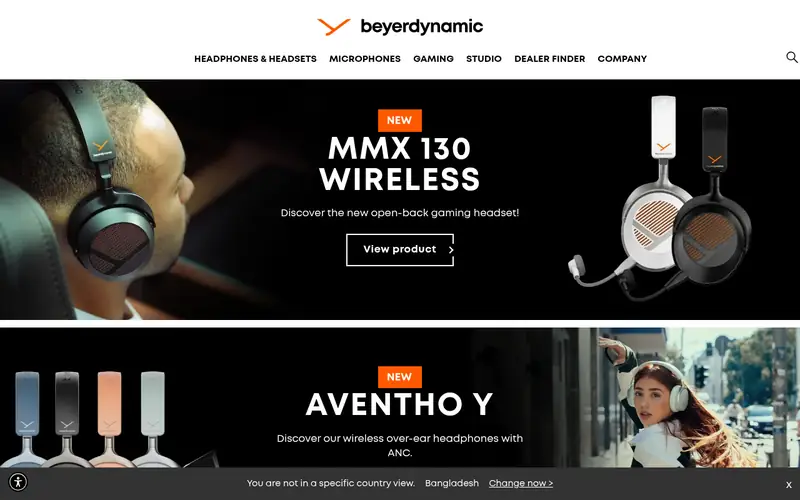
- Best for
- Open-back reference that is easy to drive
- Standout
- Low impedance suits phones and interfaces
- Starting price
- Check current retail price
- Free plan or trial
- One-time hardware purchase
The DT 900 PRO X is part of Beyerdynamic's PRO X line, built around the company's STELLAR.45 driver. The vendor lists an open-back design with 48 ohms impedance and a frequency response of 5 Hz to 40 kHz. That low impedance means it plays loud from modest gear, which is unusual for an open-back studio model.
It suits home producers who switch between an audio interface and a laptop and do not want to buy a separate amp. The catch is the open-back build, which is unsuitable for tracking vocals or anything that needs isolation. Pads and headbands are user-replaceable, so the long-term cost of ownership is reasonable.
Where the price comes from
Check current retail price. Hardware prices move often, so check the Beyerdynamic DT 900 PRO X maker page or a retailer before you buy.
Benefits
- Low impedance suits phones and interfaces
- replaceable pads and headband
- sturdy build
Drawbacks
- Open-back design leaks
- clamp force is firm at first
Use case to skip: this limit matters to you: open-back design leaks.
Our take. A sensible pick for open-back reference that is easy to drive.
If it does not fit, compare Sennheiser HD 490 PRO or Audio-Technica ATH-M50x in this list.

- Best for
- Open-back spatial and immersive mixing
- Standout
- Designed with spatial audio work in mind
- Starting price
- Check current retail price
- Free plan or trial
- One-time hardware purchase
The MDR-MV1 is Sony's open-back monitor aimed at stereo and spatial audio production. Sony lists a frequency response of 5 Hz to 80 kHz and 24 ohms impedance, so it is easy to drive from most interfaces. The detachable cable and replaceable parts are practical touches for a working studio.
It suits engineers doing immersive or binaural work who want an open-back reference that does not need a dedicated amp. The catch is the price relative to simpler open-back models, and the open design gives almost no isolation. If your room is noisy, this is not the pair to buy.
Where the price comes from
Check current retail price. Hardware prices move often, so check the Sony MDR-MV1 maker page or a retailer before you buy.
Benefits
- Designed with spatial audio work in mind
- detachable cable
- lightweight open-back build
Drawbacks
- Higher price than comparable open-backs
- limited isolation
Use case to skip: this limit matters to you: higher price than comparable open-backs.
Our take. A sensible pick for open-back spatial and immersive mixing.
If it does not fit, compare Sennheiser HD 490 PRO or Audio-Technica ATH-M50x in this list.

- Best for
- Closed-back neutral tuning on a budget
- Standout
- Closed-back design with a relatively neutral curve
- Starting price
- Check current retail price
- Free plan or trial
- One-time hardware purchase
The K371 is AKG's closed-back studio model, tuned toward a reference curve rather than a consumer bass boost. The vendor lists 50 mm drivers, 32 ohms impedance and a frequency response of 5 Hz to 40 kHz. It folds flat and ships with a detachable cable, which makes it easy to pack for sessions.
It suits producers who need a closed-back pair for tracking and want something closer to neutral than the ATH-M50x. The catch is build longevity: the earpads are the first part to wear, and the headband fit is not generous for larger heads. Try before buying if you can.
Where the price comes from
Check current retail price. Hardware prices move often, so check the AKG K371 maker page or a retailer before you buy.
Benefits
- Closed-back design with a relatively neutral curve
- folding build
- detachable cable
Drawbacks
- Pads can wear quickly
- headband sizing suits smaller heads better
Use case to skip: this limit matters to you: pads can wear quickly.
Our take. A sensible pick for closed-back neutral tuning on a budget.
If it does not fit, compare Sennheiser HD 490 PRO or Audio-Technica ATH-M50x in this list.

- Best for
- Closed-back monitoring with replaceable parts
- Standout
- Every part is user-replaceable
- Starting price
- Check current retail price
- Free plan or trial
- One-time hardware purchase
The NTH-100 is Rode's first over-ear headphone, aimed at studio monitoring and content creation. Rode lists 40 mm dynamic drivers, 32 ohms impedance and a closed-back design. The standout feature is modularity: pads, headband and cable are all replaceable, and Rode sells the parts separately.
It suits podcasters, streamers and engineers who want a closed-back pair that can be repaired rather than replaced. The catch is tuning, which leans slightly warm, so it works better for tracking and casual checks than as a single mixing reference. Pair it with an open-back model if critical mixing is the goal.
Where the price comes from
Check current retail price. Hardware prices move often, so check the Rode NTH-100 maker page or a retailer before you buy.
Benefits
- Every part is user-replaceable
- closed-back isolation
- detachable cable with locking connector
Drawbacks
- Tuning is slightly warm rather than flat
- not an open-back reference
Use case to skip: this limit matters to you: tuning is slightly warm rather than flat.
Our take. A sensible pick for closed-back monitoring with replaceable parts.
If it does not fit, compare Sennheiser HD 490 PRO or Audio-Technica ATH-M50x in this list.
What specs matter when you buy
The first decision is open-back versus closed-back. Open-back models leak sound in both directions, which makes them unsuitable for tracking but gives a wider, more natural stage for mixing. Closed-back models isolate and are the right choice for recording vocals or working in a shared room. Most studios end up with one of each.
Impedance and sensitivity decide whether your gear can drive the headphones properly. Low-impedance models around 32 to 48 ohms usually run from an audio interface or laptop. Higher-impedance models, roughly 120 ohms and up, need a dedicated headphone amp to reach a clean level. Check both figures on the vendor datasheet, not just the impedance.
Look at the published frequency response and, more importantly, whether the vendor publishes a target curve or measurement data. A wide response figure such as 5 Hz to 40 kHz says little about tonal balance on its own. Also check whether pads, cables and headbands are replaceable and sold as spare parts, because pads are the first thing to wear out. A detachable cable is worth having on any headphone that leaves the studio.
Questions worth answering first
Buying checklist
- Confirm whether you need open-back for mixing or closed-back for tracking, since one pair rarely does both well.
- Check the impedance and sensitivity against your interface or headphone amp before buying.
- Verify that replacement earpads and cables are sold as spare parts.
- Read the vendor datasheet for the exact frequency response rather than relying on marketing copy.
- Decide whether a detachable cable matters for your setup and cable routing.
- Buy from a seller with a return window so you can check fit and comfort.
FAQ
Do I need an amp for studio monitoring headphones?
It depends on impedance. Models around 32 to 48 ohms usually run from an audio interface. Higher-impedance models, roughly 120 ohms and above, benefit from a dedicated headphone amp to reach a clean listening level without distortion.
Open-back or closed-back for mixing?
Open-back is generally preferred for mixing because it gives a wider stage and less internal resonance. Closed-back is better for tracking, recording vocals and working in noisy rooms. Many engineers keep one of each.
Can I use studio headphones for gaming or casual listening?
Yes. Any of these models will play music and games. The trade-off is that reference-tuned headphones can sound lean compared with consumer models that boost bass, and open-back designs leak sound into the room.
How long do studio headphones last?
It varies with build and care. Pads typically wear first, often within a couple of years of regular use. Models with replaceable pads, cables and headbands can last many years, so check spare-part availability before buying.
Are planar-magnetic headphones better than dynamic ones?
Neither is universally better. Planar drivers are often described as fast and detailed, while dynamic drivers are lighter and easier to drive. The right choice depends on your amp, budget and the sound you want as a reference.
What is a reasonable budget for studio monitoring headphones?
Published list prices for the models here run from about 149 USD to around 599 USD. Budget closed-back pairs cover tracking well. Open-back reference models cost more and often need an amp, which adds to the total.
Sources we checked
Change log: First published 22 Nov 2026.