7 Best PCIe 5.0 NVMe SSDs in 2026
The Crucial T705 is the top pick for most buyers who want maximum sequential speed and a heatsink option, and it suits high-end gaming and content work. For lower power and cooler running, look at the Samsung 9100 Pro. If you want a strong value PCIe 5.0 drive with a heatsink included, consider the Crucial P510.
 By Shihab Mia · Published 21 Nov 2026
We run no ads and no affiliate links at launch. The order of a list follows our published method. How lists are ordered: how we score.
Prices are the starting prices vendors list publicly. Plans change, so confirm the current price on the vendor page before you buy.
Key takeaways
- PCIe 5.0 drives need a CPU and motherboard that support the standard; older platforms will run them at PCIe 4.0 speeds.
- Many 5.0 SSDs run hot under sustained load, so a heatsink model or a motherboard M.2 heatsink is often worth having.
- Sequential read ratings on current drives commonly sit in the 10,000-14,900 MB/s range, but real-world gains over PCIe 4.0 are smaller in everyday tasks.
- Prices vary widely by capacity and heatsink option; check the vendor site or current retail price before buying.
- Capacity, endurance rating and warranty length matter as much as peak speed for long-term use.
Side-by-side
Grouped by fit and cost. Tap a product to jump to its full entry.
| Fit | Cost | |||
|---|---|---|---|---|
| Product | Best for | Standout feature | Listed starting price | Free plan or trial |
| 1Crucial T705 | Top overall speed | Very high sequential read and write ratings | Check current retail price (varies by capacity and heatsink) | One-time hardware purchase |
| 2Samsung 9100 Pro | Cool, efficient high-end builds | Strong performance with improved power efficiency | Check current retail price (varies by capacity) | One-time hardware purchase |
| 3Crucial P510 | Value 5.0 with heatsink option | Lower-cost entry to PCIe 5.0 | Check current retail price (varies by capacity) | One-time hardware purchase |
| 4WD Black SN8100 | Gaming and creative work | High sequential ratings | Check current retail price (varies by capacity) | One-time hardware purchase |
| 5Seagate FireCuda 540 | Brand-loyal Seagate builds | PCIe 5.0 performance from a major storage brand | Check current retail price (varies by capacity) | One-time hardware purchase |
| 6Corsair MP700 Pro | Enthusiast water/air cooling | Very high sequential ratings | Check current retail price (varies by capacity and cooler) | One-time hardware purchase |
| 7Sabrent Rocket 5 | High-end capacity seekers | High sequential ratings | Check current retail price (varies by capacity) | One-time hardware purchase |
How we picked
This guide is based on research, not hands-on testing. We reviewed vendor product pages, published spec sheets and documentation for each drive, focusing on sequential and random ratings, capacity options, heatsink variants, endurance figures and warranty terms. We cross-checked that each model was released between 2023 and 2025 and is still listed as current by the manufacturer. Prices are shown as "check current retail price" because they move often by capacity and region. The ranking weighs performance, cooling needs, capacity range and positioning for gaming versus workstation use.
The 7 picks in detail

- Best for
- Top overall speed
- Standout
- Very high sequential read and write ratings
- Starting price
- Check current retail price (varies by capacity and heatsink)
- Free plan or trial
- One-time hardware purchase
The Crucial T705 is a flagship PCIe 5.0 drive built on Micron TLC NAND and a Phison controller. Crucial lists sequential read ratings up to around 14,500 MB/s on the 2TB model, with strong write figures too. It comes in capacities from 1TB upward and in both bare and heatsink versions. The heatsink variant suits builds where the motherboard M.2 slot lacks a good cooler.
It suits gamers, video editors and anyone moving large files who has a PCIe 5.0 platform. The main catch is heat: sustained writes can push temperatures up, so a heatsink is advisable. It is also priced at the premium end, so buyers on a budget should weigh whether they need the top sequential numbers.
Where the price comes from
Check current retail price (varies by capacity and heatsink). Hardware prices move often, so check the Crucial T705 maker page or a retailer before you buy.
Benefits
- Very high sequential read and write ratings
- available with and without a heatsink
- uses Micron 232-layer TLC NAND
Drawbacks
- Runs warm under sustained load
- premium price
Use case to skip: this limit matters to you: runs warm under sustained load.
Our take. A sensible pick for top overall speed.
If it does not fit, compare Samsung 9100 Pro or Crucial P510 in this list.

- Best for
- Cool, efficient high-end builds
- Standout
- Strong performance with improved power efficiency
- Starting price
- Check current retail price (varies by capacity)
- Free plan or trial
- One-time hardware purchase
The Samsung 9100 Pro is Samsung's PCIe 5.0 consumer flagship, succeeding the 990 Pro line. Samsung positions it for both desktop and laptop use, with an emphasis on power efficiency alongside high sequential speeds. It uses Samsung's own controller and NAND. Capacities run from 1TB up to 4TB, and a heatsink version is offered for desktop builds.
It suits buyers who want top-tier speed but care about thermals and laptop battery life. The catch is price, which sits at the high end, and the fact that the fastest sequential numbers only matter if your workload moves large files. For gaming and general use, the difference versus a good PCIe 4.0 drive is modest.
Where the price comes from
Check current retail price (varies by capacity). Hardware prices move often, so check the Samsung 9100 Pro maker page or a retailer before you buy.
Benefits
- Strong performance with improved power efficiency
- available in high capacities
- Samsung Magician software support
Drawbacks
- Premium pricing
- heatsink availability varies by region
Use case to skip: this limit matters to you: premium pricing.
Our take. A sensible pick for cool, efficient high-end builds.
If it does not fit, compare Crucial T705 or Crucial P510 in this list.
- Best for
- Value 5.0 with heatsink option
- Standout
- Lower-cost entry to PCIe 5.0
- Starting price
- Check current retail price (varies by capacity)
- Free plan or trial
- One-time hardware purchase
The Crucial P510 is positioned as a more affordable PCIe 5.0 option in Crucial's lineup. Crucial lists sequential read ratings around 11,000 MB/s, with lower write figures than the T705. It is offered in 1TB and 2TB capacities, with and without a heatsink. It targets gamers and general users who want 5.0 speeds without flagship pricing.
It suits mainstream builds where the drive is mostly for games, apps and everyday files. The catch is that sustained write performance and endurance are below the flagship tier, so heavy video or database work may favor a higher-end model. Check the exact capacity's spec sheet, since ratings differ between sizes.
Where the price comes from
Check current retail price (varies by capacity). Hardware prices move often, so check the Crucial P510 maker page or a retailer before you buy.
Benefits
- Lower-cost entry to PCIe 5.0
- heatsink version available
- good sequential read ratings
Drawbacks
- Write speeds below flagship drives
- not aimed at heavy sustained workloads
Use case to skip: this limit matters to you: write speeds below flagship drives.
Our take. A sensible pick for value 5.0 with heatsink option.
If it does not fit, compare Crucial T705 or Samsung 9100 Pro in this list.

- Best for
- Gaming and creative work
- Standout
- High sequential ratings
- Starting price
- Check current retail price (varies by capacity)
- Free plan or trial
- One-time hardware purchase
The WD Black SN8100 is Western Digital's PCIe 5.0 flagship in the WD Black gaming line. WD lists sequential read ratings in the 14,000 MB/s range for higher capacities, with strong random performance. It is sold in several capacities and in a heatsink version. WD targets gamers and content creators who want fast load times and quick large-file transfers.
It suits high-end gaming builds and creative workstations on PCIe 5.0 platforms. The catch is the price and the heat output under sustained load, which makes the heatsink version the safer choice for most desktops. As with all 5.0 drives, everyday gains over PCIe 4.0 are smaller than the peak numbers suggest.
Where the price comes from
Check current retail price (varies by capacity). Hardware prices move often, so check the WD Black SN8100 maker page or a retailer before you buy.
Benefits
- High sequential ratings
- WD Black positioning for gaming
- available with heatsink
Drawbacks
- Premium price
- runs warm without cooling
Use case to skip: this limit matters to you: premium price.
Our take. A sensible pick for gaming and creative work.
If it does not fit, compare Crucial T705 or Samsung 9100 Pro in this list.
- Best for
- Brand-loyal Seagate builds
- Standout
- PCIe 5.0 performance from a major storage brand
- Starting price
- Check current retail price (varies by capacity)
- Free plan or trial
- One-time hardware purchase
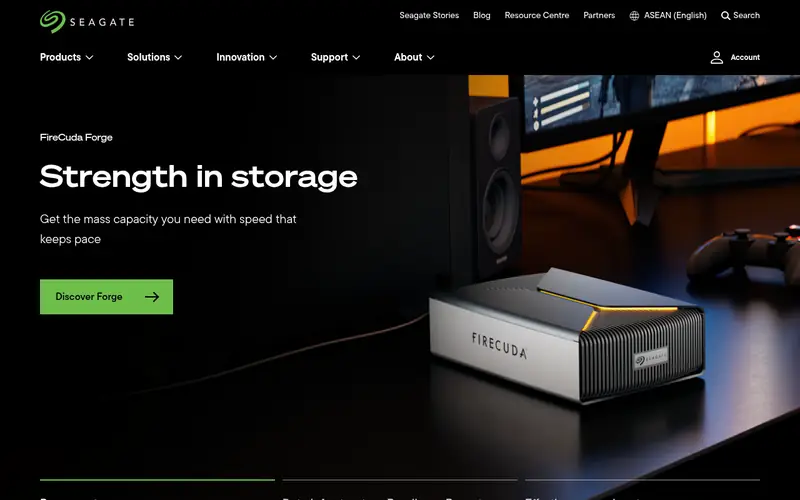
The Seagate FireCuda 540 is Seagate's PCIe 5.0 gaming SSD. Seagate lists sequential read ratings up to around 10,000 MB/s, with strong write figures and a focus on endurance. It is offered in 1TB and 2TB capacities, with a heatsink version for desktops. It targets gamers and PC builders who already favor Seagate drives.
It suits buyers who want a known storage brand and a heatsink option without chasing the absolute highest sequential numbers. The catch is that its peak read rating is below the fastest 5.0 drives, and capacity choices are limited. Check the current spec sheet for the exact capacity you buy, since ratings can differ.
Where the price comes from
Check current retail price (varies by capacity). Hardware prices move often, so check the Seagate FireCuda 540 maker page or a retailer before you buy.
Benefits
- PCIe 5.0 performance from a major storage brand
- available with heatsink
- good endurance ratings
Drawbacks
- Fewer capacity options than some rivals
- price varies widely
Use case to skip: this limit matters to you: fewer capacity options than some rivals.
Our take. A sensible pick for brand-loyal Seagate builds.
If it does not fit, compare Crucial T705 or Samsung 9100 Pro in this list.
- Best for
- Enthusiast water/air cooling
- Standout
- Very high sequential ratings
- Starting price
- Check current retail price (varies by capacity and cooler)
- Free plan or trial
- One-time hardware purchase
The Corsair MP700 Pro is a high-end PCIe 5.0 drive in Corsair's storage line. Corsair lists sequential read ratings up to around 12,400 MB/s, with high write figures. It is sold in several capacities and in variants including a bare drive, one with an air cooler, and a water-block version for custom loops. It targets enthusiasts and workstation builders.
It suits buyers with strong case airflow or a custom loop who want top-tier sequential speed. The catch is that it runs hot and really wants the bundled cooler or a good motherboard heatsink, and the price is at the premium end. For most gaming builds, a cheaper 5.0 or 4.0 drive delivers similar real-world feel.
Where the price comes from
Check current retail price (varies by capacity and cooler). Hardware prices move often, so check the Corsair MP700 Pro maker page or a retailer before you buy.
Benefits
- Very high sequential ratings
- offered with a liquid-cooling-ready option
- strong for large file work
Drawbacks
- Needs good cooling
- premium pricing
Use case to skip: this limit matters to you: needs good cooling.
Our take. A sensible pick for enthusiast water/air cooling.
If it does not fit, compare Crucial T705 or Samsung 9100 Pro in this list.

- Best for
- High-end capacity seekers
- Standout
- High sequential ratings
- Starting price
- Check current retail price (varies by capacity)
- Free plan or trial
- One-time hardware purchase
The Sabrent Rocket 5 is Sabrent's PCIe 5.0 flagship. Sabrent lists sequential read ratings up to around 14,000 MB/s on higher capacities, with strong write figures. It is offered in capacities from 1TB up to 4TB, with and without a heatsink. It targets enthusiasts and workstation users who want high capacity and high speed.
It suits buyers who need a large, fast drive for big project files or game libraries. The catch is heat under sustained load, so the heatsink version is the better pick for most desktops, and pricing climbs quickly at higher capacities. Confirm the exact capacity's ratings on Sabrent's spec page before buying.
Where the price comes from
Check current retail price (varies by capacity). Hardware prices move often, so check the Sabrent Rocket 5 maker page or a retailer before you buy.
Benefits
- High sequential ratings
- wide capacity range
- available with heatsink
Drawbacks
- Runs warm
- pricing varies by capacity
Use case to skip: this limit matters to you: runs warm.
Our take. A sensible pick for high-end capacity seekers.
If it does not fit, compare Crucial T705 or Samsung 9100 Pro in this list.
What specs matter when you buy
Platform support comes first. A PCIe 5.0 SSD only runs at 5.0 speed if your CPU and motherboard support it. On older boards it will usually run at PCIe 4.0 or lower, which is fine but means you pay for speed you cannot use. Check your motherboard's M.2 slot spec and whether it shares lanes with other devices.
Cooling is the next big factor. Many 5.0 drives run hot under sustained writes, and some throttle without a heatsink. If your motherboard M.2 slot has a good heatsink, a bare drive is fine. Otherwise buy a heatsink version or add one. Also check clearance under your GPU and whether the heatsink fits your case.
Then look at the numbers that matter for your workload. Sequential read and write ratings help with large file transfers. Random read/write and endurance (TBW) matter more for databases, virtual machines and heavy writing. Capacity affects both price and endurance. Finally, check warranty length, the included software, and whether the drive is TLC or QLC, since QLC drives can slow down on long writes.
Questions worth answering first
Buying checklist
- Confirm your CPU and motherboard support PCIe 5.0 in the M.2 slot you plan to use.
- Check whether the drive needs a heatsink and whether your motherboard slot already has one.
- Compare the endurance (TBW) rating for the exact capacity you intend to buy.
- Verify the drive is TLC or QLC and whether sustained write speed matters for your work.
- Measure clearance under your GPU and confirm the heatsink version fits your case.
- Check the warranty length and the vendor's support terms before paying.
FAQ
Do I need a heatsink for a PCIe 5.0 SSD?
Often yes. Many 5.0 drives run hot under sustained writes and can throttle without cooling. If your motherboard M.2 slot has a good heatsink, a bare drive may be fine. Otherwise buy a heatsink version or add one, and check clearance first.
Will a PCIe 5.0 SSD work on a PCIe 4.0 motherboard?
Usually yes, but it will run at PCIe 4.0 speed. The drive is backward compatible, so it works, but you will not get the full 5.0 bandwidth. Check your motherboard manual for the M.2 slot's supported standard before buying.
Is PCIe 5.0 noticeably faster than PCIe 4.0 in games?
In most games, load times improve only slightly. The biggest gains show up in large file transfers and some creative workloads. Peak sequential ratings look dramatic, but everyday gaming and app use rarely saturates the interface.
What capacities are available?
Most current PCIe 5.0 drives come in 1TB, 2TB and 4TB, with some offering other sizes. Endurance and speed ratings can differ by capacity, so check the spec sheet for the exact size you buy rather than assuming all sizes match.
Does a faster SSD improve FPS?
No. An SSD affects load times and file transfers, not frame rates once a game is running. A PCIe 5.0 drive can speed up loading and level streaming, but it will not raise FPS. GPU and CPU matter far more for frame rates.
Are PCIe 5.0 SSDs worth it for most buyers?
For most gaming and general users, a good PCIe 4.0 drive is enough and costs less. PCIe 5.0 makes more sense for large-file work, high-end builds and buyers who want the fastest current hardware. Weigh price and cooling needs against real gains.
Sources we checked
Change log: First published 21 Nov 2026.