7 Best Raspberry Pi Alternatives in 2026
The Radxa Rock 5B is the strongest general-purpose Raspberry Pi alternative for most buyers, thanks to its Rockchip RK3588 SoC, up to 16GB of RAM and a Pi-style layout. If you want the lowest cost, the Orange Pi 5 family is a solid budget pick. If you need official documentation and long-term availability, the BeagleBone Black remains a dependable choice for embedded work.
 By Shihab Mia · Published 21 Nov 2026
We run no ads and no affiliate links at launch. The order of a list follows our published method. How lists are ordered: how we score.
Prices are the starting prices vendors list publicly. Plans change, so confirm the current price on the vendor page before you buy.
Key takeaways
- The Radxa Rock 5B uses the RK3588 SoC and supports up to 16GB LPDDR4x RAM, well above the Pi 5's 8GB ceiling.
- Orange Pi 5 boards typically cost less than comparable Raspberry Pi 5 configurations, but software support varies by model.
- Most alternatives run Linux, but board support packages and community documentation differ widely between vendors.
- None of these boards match the Raspberry Pi's ecosystem size or the depth of its official documentation.
- Prices below are manufacturer list prices in USD; check the vendor site for current stock and regional pricing.
Side-by-side
Grouped by fit and cost. Tap a product to jump to its full entry.
| Fit | Cost | |||
|---|---|---|---|---|
| Product | Best for | Standout feature | Listed starting price | Free plan or trial |
| 1Radxa Rock 5B | High-performance ARM single-board computing | RK3588 SoC with eight cores | Check current retail price (4GB RAM model) | One-time hardware purchase |
| 2Orange Pi 5 | Low-cost RK3588 builds | Lower price than most RK3588 boards | Check current retail price (4GB RAM model) | One-time hardware purchase |
| 3BeagleBone Black | Embedded and industrial projects | Long-standing official documentation | Check current retail price | One-time hardware purchase |
| 4Khadas VIM4 | Media and edge AI work | Amlogic A311D2 SoC | Check current retail price | One-time hardware purchase |
| 5Pine64 RockPro64 | NAS and home server builds | PCIe slot for add-in cards | Check current retail price (2GB RAM model) | One-time hardware purchase |
| 6Banana Pi BPI-M7 | Compact RK3588 builds | RK3588 in a small form factor | Check current retail price (4GB RAM model) | One-time hardware purchase |
| 7Odroid M1 | Storage-heavy and low-power builds | Native SATA and M.2 support | Check current retail price | One-time hardware purchase |
How we picked
This guide is based on research, not hands-on testing. We reviewed vendor product pages, published spec sheets, official documentation and manufacturer list prices for boards released between 2023 and 2025 that vendors still sell. We compared SoC, RAM ceilings, storage options, I/O, software support and price. We did not run benchmarks or lab tests. Where a figure was unclear, we described it qualitatively rather than guessing.
The 7 picks in detail
- Best for
- High-performance ARM single-board computing
- Standout
- RK3588 SoC with eight cores
- Starting price
- Check current retail price (4GB RAM model)
- Free plan or trial
- One-time hardware purchase
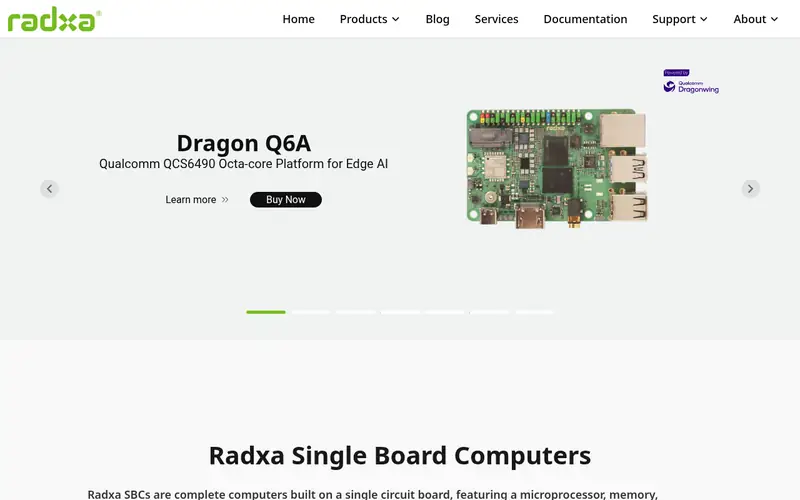
The Rock 5B is a credit-card-sized board built around the Rockchip RK3588. Radxa lists an 8-core CPU (four Cortex-A76 and four Cortex-A55 cores), a Mali-G610 GPU and an NPU rated for AI workloads. Memory options run from 4GB to 16GB of LPDDR4x. The board includes a 2.5GbE port, an M.2 M-key slot for NVMe storage, HDMI output, USB ports and a 40-pin GPIO header that follows the Raspberry Pi layout.
It suits users who need more RAM and faster storage than a Raspberry Pi 5 offers. The main catch is thermal: the RK3588 runs hot, so plan on a heatsink or active cooling. Software support comes from Radxa's own images and community distributions, and it is less polished than Raspberry Pi OS. Check the vendor site for current pricing and stock.
Where the price comes from
Check current retail price (4GB RAM model). Hardware prices move often, so check the Radxa Rock 5B maker page or a retailer before you buy.
Benefits
- RK3588 SoC with eight cores
- up to 16GB RAM
- M.2 M-key slot and 2.5GbE
Drawbacks
- Needs a heatsink or fan under load
- software support trails Raspberry Pi
Use case to skip: this limit matters to you: needs a heatsink or fan under load.
Our take. A sensible pick for high-performance ARM single-board computing.
If it does not fit, compare Orange Pi 5 or BeagleBone Black in this list.
- Best for
- Low-cost RK3588 builds
- Standout
- Lower price than most RK3588 boards
- Starting price
- Check current retail price (4GB RAM model)
- Free plan or trial
- One-time hardware purchase
The Orange Pi 5 uses the same Rockchip RK3588 family as the Rock 5B and comes in several memory configurations. It offers an M.2 M-key slot, HDMI output, USB ports and a 40-pin header. Orange Pi sells it as a low-cost route into RK3588 performance for desktop, media and light server use.
The trade-off is software. Orange Pi provides its own OS images, but documentation and community help are thinner than what Raspberry Pi users get. Buyers who want a cheap, capable board and are comfortable troubleshooting Linux will get good value. Those who need hand-holding should look elsewhere. Confirm the exact RAM variant and price on the vendor site.
Where the price comes from
Check current retail price (4GB RAM model). Hardware prices move often, so check the Orange Pi 5 maker page or a retailer before you buy.
Benefits
- Lower price than most RK3588 boards
- M.2 slot for NVMe
- multiple RAM options
Drawbacks
- Documentation quality varies
- community support is smaller than Raspberry Pi
Use case to skip: this limit matters to you: documentation quality varies.
Our take. A sensible pick for low-cost RK3588 builds.
If it does not fit, compare Radxa Rock 5B or BeagleBone Black in this list.
- Best for
- Embedded and industrial projects
- Standout
- Long-standing official documentation
- Starting price
- Check current retail price
- Free plan or trial
- One-time hardware purchase
The BeagleBone Black is a long-running board from the BeagleBoard.org Foundation. It uses a Texas Instruments Sitara AM335x SoC with a single Cortex-A8 core, 512MB of RAM and 4GB of onboard eMMC storage. It runs Debian-based images and is designed for embedded control, not general desktop work.
Its strength is documentation and the "cape" add-on ecosystem, which lets you stack expansion boards for sensors, motor control and industrial I/O. It is slower than the RK3588 boards above and has far less RAM, so it is not a media or desktop substitute. For reliable embedded projects with strong official docs, it remains a sensible choice.
Where the price comes from
Check current retail price. Hardware prices move often, so check the BeagleBone Black maker page or a retailer before you buy.
Benefits
- Long-standing official documentation
- extensive GPIO and cape ecosystem
- stable availability
Drawbacks
- Older, slower SoC
- not suited to desktop or media use
Use case to skip: this limit matters to you: older, slower SoC.
Our take. A sensible pick for embedded and industrial projects.
If it does not fit, compare Radxa Rock 5B or Orange Pi 5 in this list.

- Best for
- Media and edge AI work
- Standout
- Amlogic A311D2 SoC
- Starting price
- Check current retail price
- Free plan or trial
- One-time hardware purchase
The Khadas VIM4 is built on the Amlogic A311D2 SoC with an 8-core CPU, 8GB of LPDDR4X RAM and an NPU for AI inference. Khadas positions it for media centers, edge computing and Android or Linux development. It includes HDMI input and output, USB ports, Gigabit Ethernet and an M.2 slot.
The VIM4 costs more than most alternatives here, so it makes sense when you need its media handling or NPU. Khadas provides its own documentation and OS images, but the community is smaller than the Raspberry Pi's. Check the vendor site for the current bundle and price, since Khadas sells several configurations.
Where the price comes from
Check current retail price. Hardware prices move often, so check the Khadas VIM4 maker page or a retailer before you buy.
Benefits
- Amlogic A311D2 SoC
- 8GB RAM standard
- strong media and NPU support
Drawbacks
- Higher price
- smaller community than mainstream boards
Use case to skip: this limit matters to you: higher price.
Our take. A sensible pick for media and edge AI work.
If it does not fit, compare Radxa Rock 5B or Orange Pi 5 in this list.
- Best for
- NAS and home server builds
- Standout
- PCIe slot for add-in cards
- Starting price
- Check current retail price (2GB RAM model)
- Free plan or trial
- One-time hardware purchase
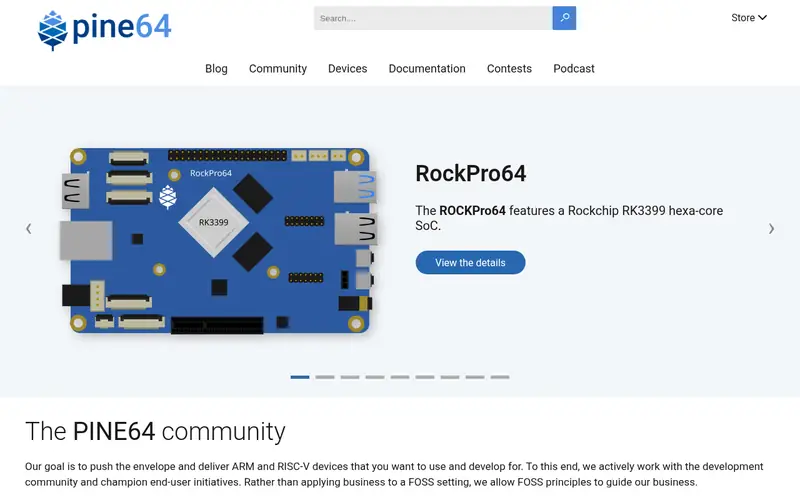
The RockPro64 from Pine64 uses the Rockchip RK3399 SoC with a 6-core CPU and comes in 2GB and 4GB RAM versions. Its standout feature is a PCIe x4 slot, which lets you add SATA controllers, network cards or other expansion cards. That makes it a popular base for DIY NAS and home server projects.
The RK3399 is older than the RK3588 used by newer boards, so raw performance is lower. Pine64's stock and shipping can be inconsistent, so check availability before planning a build. It remains a practical choice for storage-focused projects that need a real PCIe slot.
Where the price comes from
Check current retail price (2GB RAM model). Hardware prices move often, so check the Pine64 RockPro64 maker page or a retailer before you buy.
Benefits
- PCIe slot for add-in cards
- multiple RAM options
- good for storage builds
Drawbacks
- Older RK3399 SoC
- availability can be intermittent
Use case to skip: this limit matters to you: older RK3399 SoC.
Our take. A sensible pick for NAS and home server builds.
If it does not fit, compare Radxa Rock 5B or Orange Pi 5 in this list.
- Best for
- Compact RK3588 builds
- Standout
- RK3588 in a small form factor
- Starting price
- Check current retail price (4GB RAM model)
- Free plan or trial
- One-time hardware purchase
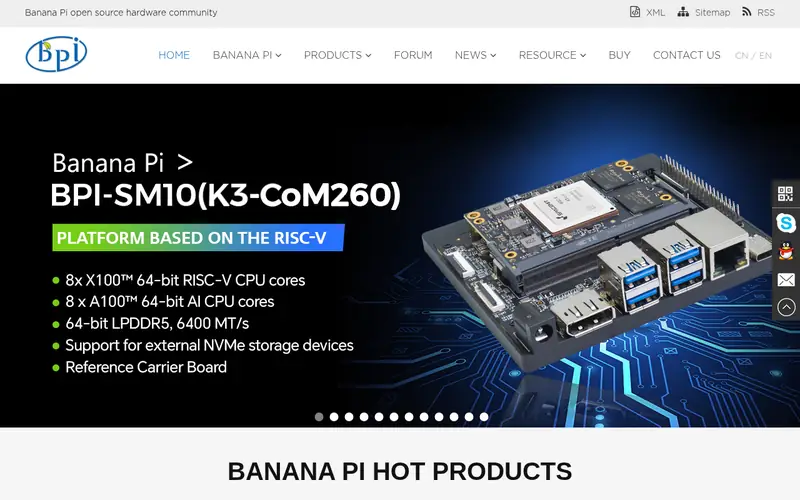
The Banana Pi BPI-M7 packs the Rockchip RK3588 into a compact board with options for 4GB, 8GB or 16GB of RAM. It includes an M.2 M-key slot for NVMe storage, HDMI output, USB ports and a 40-pin GPIO header. It targets users who want RK3588 performance in a smaller footprint.
Banana Pi's documentation and community are smaller than Raspberry Pi's, so expect more self-reliance. The board is a reasonable pick for compact desktop or edge builds where space matters. Confirm the RAM variant and current price on the vendor site before ordering.
Where the price comes from
Check current retail price (4GB RAM model). Hardware prices move often, so check the Banana Pi BPI-M7 maker page or a retailer before you buy.
Benefits
- RK3588 in a small form factor
- M.2 NVMe support
- multiple RAM options
Drawbacks
- Smaller community
- documentation less complete than Raspberry Pi
Use case to skip: this limit matters to you: smaller community.
Our take. A sensible pick for compact RK3588 builds.
If it does not fit, compare Radxa Rock 5B or Orange Pi 5 in this list.
- Best for
- Storage-heavy and low-power builds
- Standout
- Native SATA and M.2 support
- Starting price
- Check current retail price
- Free plan or trial
- One-time hardware purchase
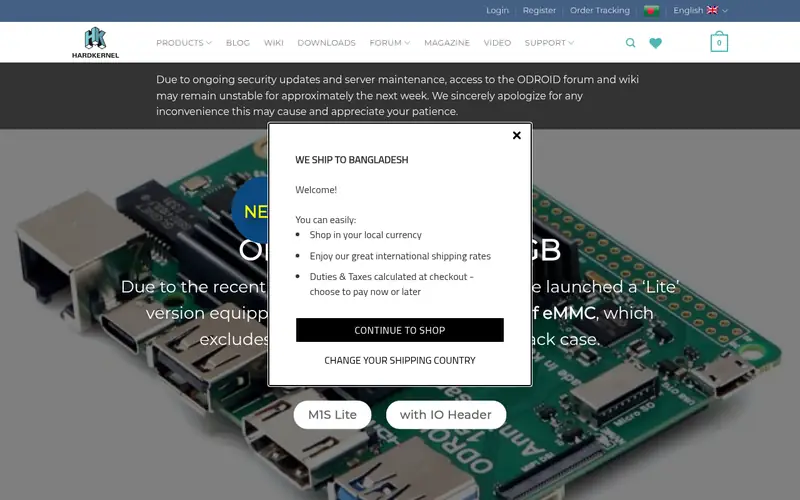
The Odroid M1 from Hardkernel uses the Rockchip RK3568 SoC with a 4-core CPU and comes with 8GB of RAM. It stands out for storage: it has an M.2 slot and a SATA interface, making it a good fit for NAS, backup and low-power server builds. It runs Linux and Android images from Hardkernel.
The RK3568 is less powerful than the RK3588 used by the top picks, so it is not the board for heavy desktop or gaming use. For always-on storage and light server tasks, its low power draw and native SATA support are real advantages. Check Hardkernel's site for current pricing and accessory bundles.
Where the price comes from
Check current retail price. Hardware prices move often, so check the Odroid M1 maker page or a retailer before you buy.
Benefits
- Native SATA and M.2 support
- low power draw
- fanless-friendly design
Drawbacks
- RK3568 SoC is slower than RK3588
- limited GPU performance
Use case to skip: this limit matters to you: RK3568 SoC is slower than RK3588.
Our take. A sensible pick for storage-heavy and low-power builds.
If it does not fit, compare Radxa Rock 5B or Orange Pi 5 in this list.
What specs matter when you buy
Start with the SoC and RAM. The Rockchip RK3588 family offers eight CPU cores and up to 16GB of RAM on some boards, which suits desktop, media and light server work. Older chips like the RK3399 or RK3568 use less power but deliver lower performance. Match the chip to your workload rather than buying the fastest board by default.
Look at storage and I/O next. An M.2 M-key slot lets you add NVMe storage, which is much faster than microSD. A PCIe slot, like the one on the RockPro64, opens up SATA controllers and network cards for NAS builds. Check the number and type of USB ports, HDMI outputs and Ethernet speed, since these vary widely between boards.
Software support is the factor buyers underestimate most. Raspberry Pi OS and the Pi community are hard to match. Alternative boards rely on vendor images, Armbian or community distributions, and quality differs by model. Read the vendor's documentation and check forum activity before you commit. Also confirm cooling requirements, power supply specs and whether the board ships with a case or heatsink.
Questions worth answering first
Buying checklist
- Confirm the exact RAM variant and price on the vendor site before ordering.
- Check that the board's OS images and documentation cover your intended use case.
- Verify cooling requirements, since RK3588 boards run hot under load.
- Confirm the power supply voltage and connector type the board requires.
- Check whether you need an M.2, PCIe or SATA interface for your storage plan.
- Read recent community forum posts to gauge software maturity and support.
FAQ
Are these boards compatible with Raspberry Pi accessories?
Partially. Many boards use a 40-pin GPIO header with a Raspberry Pi-style layout, so some HATs work. Cases, power supplies and cooling solutions usually do not fit, because board dimensions and mounting holes differ. Check the vendor's documentation for each accessory.
Which alternative is closest to a Raspberry Pi 5 in performance?
The Radxa Rock 5B and Orange Pi 5 use the Rockchip RK3588 family, which offers eight CPU cores and up to 16GB of RAM on some models. Published specs put them in a similar or higher performance class than the Pi 5, though software optimization varies by board.
Do these boards run Raspberry Pi OS?
Generally no. Most run vendor-provided Linux images, Armbian or other community distributions. Some projects offer Raspberry Pi OS ports, but support is not guaranteed. Check the vendor's download page before buying if Raspberry Pi OS is a requirement.
Why are alternative boards often cheaper than a Raspberry Pi?
Pricing reflects SoC choice, memory, I/O and production volume. Some boards undercut the Pi on price while offering more RAM, but they often ship with less polished software and smaller communities. Compare total cost, including cooling, power supply and storage.
Can I use these boards as a desktop PC?
Yes, several can. The RK3588-based boards like the Rock 5B, Orange Pi 5 and BPI-M7 support desktop Linux environments with HDMI output and USB peripherals. Expect less polish than a mainstream PC, and plan on active cooling for sustained workloads.
What is the main risk when buying an alternative board?
Software support. Vendor images may be outdated, and community help is smaller than for Raspberry Pi. Before buying, read the official documentation, check forum activity and confirm the board is still in production. Availability can also be intermittent for smaller vendors.
Sources we checked
Change log: First published 21 Nov 2026.