7 Best Desktop CNC Routers for Hobbyists in 2026
The Onefinity Woodworker is the strongest pick for most hobbyists who want a rigid, expandable router for wood and plastics. It suits buyers with a dedicated bench and some assembly patience. For a lower entry cost and a fully enclosed machine, look at the Carbide 3D Nomad 3. For larger work areas and open-frame flexibility, the Shapeoko 5 Pro is the alternative to weigh.
 By Shihab Mia · Published 21 Nov 2026
We run no ads and no affiliate links at launch. The order of a list follows our published method. How lists are ordered: how we score.
Prices are the starting prices vendors list publicly. Plans change, so confirm the current price on the vendor page before you buy.
Key takeaways
- Desktop CNC prices range from a few hundred dollars for small kits to several thousand for rigid, enclosed machines.
- Work area, frame rigidity and spindle type matter more than headline speed figures.
- Most hobby routers cut wood, plastics and soft metals; steel needs a different class of machine.
- Enclosed machines reduce dust and noise but cost more and limit the size of stock you can load.
- Budget for tooling, dust collection and clamps, which often add a meaningful share to the machine price.
Side-by-side
Grouped by fit and cost. Tap a product to jump to its full entry.
| Fit | Cost | |||
|---|---|---|---|---|
| Product | Best for | Standout feature | Listed starting price | Free plan or trial |
| 1Onefinity Woodworker | Rigid open-frame routing | Stiff ball-screw-driven axes | Check current retail price (machine only, options extra) | One-time hardware purchase |
| 2Carbide 3D Nomad 3 | Enclosed benchtop work | Fully enclosed for dust and noise control | Check current retail price (enclosed machine) | One-time hardware purchase |
| 3Shapeoko 5 Pro | Larger work areas | Available in several larger sizes | Check current retail price (size-dependent) | One-time hardware purchase |
| 4Genmitsu PROVerXL 4030 V2 | Budget-friendly entry | Lower entry cost | Check current retail price (kit) | One-time hardware purchase |
| 5LongMill MK2 | Kit builders on a budget | Sold as an affordable kit | Check current retail price (kit) | One-time hardware purchase |
| 6X-Carve Pro | Small shops and light production | Built for repeated use | Check current retail price (size-dependent) | One-time hardware purchase |
| 7Carbide 3D Shapeoko 4 | Proven mid-range routing | Mature design with wide accessory support | Check current retail price (size-dependent) | One-time hardware purchase |
How we picked
This comparison is research-based. We reviewed vendor product pages, published spec sheets, assembly documentation and listed prices for each machine. We focused on work area, frame and drive type, enclosure, included software and accessory support. We did not run hands-on cutting tests. Prices and options change, so confirm current figures and specifications on each vendor site before buying.
The 7 picks in detail

- Best for
- Rigid open-frame routing
- Standout
- Stiff ball-screw-driven axes
- Starting price
- Check current retail price (machine only, options extra)
- Free plan or trial
- One-time hardware purchase
The Onefinity Woodworker is an open-frame desktop router built around ball screws on its axes, which the vendor presents as a rigidity advantage over belt-driven designs. It ships as a kit that the buyer assembles, and the company sells it in several work-area sizes. The controller runs a touchscreen interface and accepts standard G-code.
It suits hobbyists who want a stiff machine for wood, plastics and light aluminum work and who have bench space to spare. The main catch is that an open frame throws chips and dust, so dust collection and a shop environment matter. Confirm the current work-area options and price on the vendor site.
Where the price comes from
Check current retail price (machine only, options extra). Hardware prices move often, so check the Onefinity Woodworker maker page or a retailer before you buy.
Benefits
- Stiff ball-screw-driven axes
- modular design that can be expanded
- strong community documentation
Drawbacks
- Open frame means dust and noise are not contained
- assembly and tuning take time
Use case to skip: this limit matters to you: open frame means dust and noise are not contained.
Our take. A sensible pick for rigid open-frame routing.
If it does not fit, compare Carbide 3D Nomad 3 or Shapeoko 5 Pro in this list.
- Best for
- Enclosed benchtop work
- Standout
- Fully enclosed for dust and noise control
- Starting price
- Check current retail price (enclosed machine)
- Free plan or trial
- One-time hardware purchase
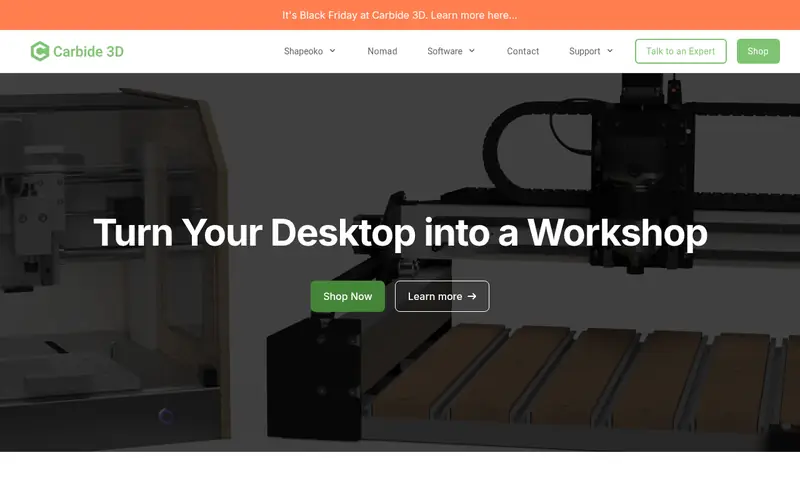
The Nomad 3 is a fully enclosed desktop CNC mill from Carbide 3D. The enclosure keeps chips contained and reduces noise, which makes it friendlier for a garage or spare room. It uses a small-format work area suited to detailed parts, jewelry-scale work and small fixtures rather than large panels.
Carbide 3D supplies its own control software, and the machine is aimed at buyers who want a self-contained unit rather than an open kit. The trade-off is size: the enclosed design caps the stock you can load. Check the vendor page for the current work envelope and price.
Where the price comes from
Check current retail price (enclosed machine). Hardware prices move often, so check the Carbide 3D Nomad 3 maker page or a retailer before you buy.
Benefits
- Fully enclosed for dust and noise control
- compact footprint
- vendor-supplied control software
Drawbacks
- Small work area limits stock size
- higher cost per unit of cutting area
Use case to skip: this limit matters to you: small work area limits stock size.
Our take. A sensible pick for enclosed benchtop work.
If it does not fit, compare Onefinity Woodworker or Shapeoko 5 Pro in this list.
- Best for
- Larger work areas
- Standout
- Available in several larger sizes
- Starting price
- Check current retail price (size-dependent)
- Free plan or trial
- One-time hardware purchase
The Shapeoko 5 Pro is Carbide 3D's larger open-frame router line, offered in multiple work-area sizes. It targets hobbyists and small shops that need to cut bigger panels or longer parts. The frame uses aluminum extrusion and the machine is sold with a range of accessories, including dust collection and tooling options.
It is a good fit if your projects are bigger than a benchtop mill can handle and you can give it a dedicated table. The catch is that open-frame routers spread dust, and the bigger sizes demand real floor or bench space. Confirm current sizes and pricing with the vendor.
Where the price comes from
Check current retail price (size-dependent). Hardware prices move often, so check the Shapeoko 5 Pro maker page or a retailer before you buy.
Benefits
- Available in several larger sizes
- rigid extrusion-based frame
- broad accessory ecosystem
Drawbacks
- Open frame needs dust management
- larger sizes need serious bench space
Use case to skip: this limit matters to you: open frame needs dust management.
Our take. A sensible pick for larger work areas.
If it does not fit, compare Onefinity Woodworker or Carbide 3D Nomad 3 in this list.
- Best for
- Budget-friendly entry
- Standout
- Lower entry cost
- Starting price
- Check current retail price (kit)
- Free plan or trial
- One-time hardware purchase
The Genmitsu PROVerXL 4030 V2 is a compact desktop router sold by SainSmart under the Genmitsu brand. It is aimed at hobbyists starting out, with a smaller work area and a kit-style build. The machine cuts wood, plastics and softer materials well within its limits.
Its appeal is cost and size: it fits on a modest bench and does not demand a large shop. The trade-off is rigidity and work area compared with premium open-frame routers, so heavy aluminum work will be slower and less forgiving. Check the vendor page for the current bundle and price.
Where the price comes from
Check current retail price (kit). Hardware prices move often, so check the Genmitsu PROVerXL 4030 V2 maker page or a retailer before you buy.
Benefits
- Lower entry cost
- compact footprint
- popular with first-time buyers
Drawbacks
- Less rigid than premium frames
- smaller work area
Use case to skip: this limit matters to you: less rigid than premium frames.
Our take. A sensible pick for budget-friendly entry.
If it does not fit, compare Onefinity Woodworker or Carbide 3D Nomad 3 in this list.

- Best for
- Kit builders on a budget
- Standout
- Sold as an affordable kit
- Starting price
- Check current retail price (kit)
- Free plan or trial
- One-time hardware purchase
The LongMill MK2 from Sienci Labs is a kit router aimed at hobbyists who want a capable machine without a premium price. It is sold in several sizes and ships as parts the buyer assembles. Sienci publishes build documentation and the machine has an active user community.
It suits buyers comfortable with assembly and basic tuning, and who want to learn the machine as they build it. The open frame means dust and noise are not contained, and kit assembly takes time. Confirm the current size options and price on the vendor site.
Where the price comes from
Check current retail price (kit). Hardware prices move often, so check the LongMill MK2 maker page or a retailer before you buy.
Benefits
- Sold as an affordable kit
- open documentation and community support
- expandable sizes
Drawbacks
- Requires assembly and tuning
- open frame with dust exposure
Use case to skip: this limit matters to you: requires assembly and tuning.
Our take. A sensible pick for kit builders on a budget.
If it does not fit, compare Onefinity Woodworker or Carbide 3D Nomad 3 in this list.
- Best for
- Small shops and light production
- Standout
- Built for repeated use
- Starting price
- Check current retail price (size-dependent)
- Free plan or trial
- One-time hardware purchase
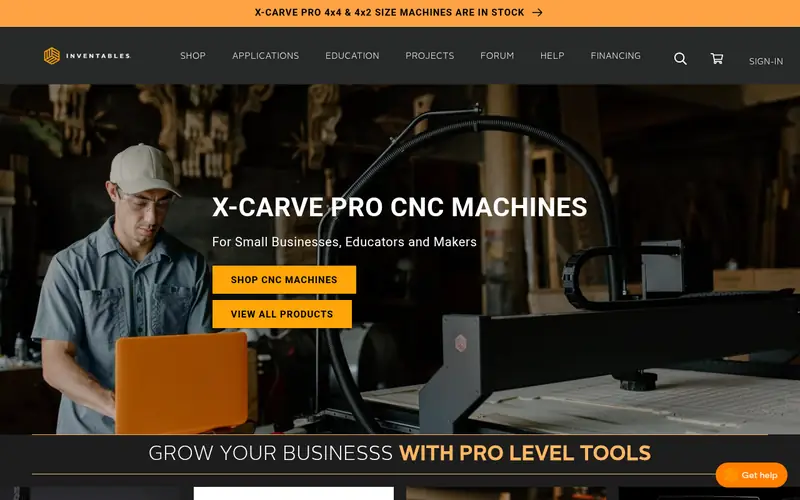
The X-Carve Pro from Inventables is positioned above the hobby tier, aimed at small shops and light production work. It comes in larger sizes and is built for repeated cutting rather than occasional use. Inventables pairs the machine with its own design and control software.
It fits buyers who need a dependable router for small-batch work and can justify the higher price. The catch is cost and footprint: it needs a dedicated space and a power plan. Check the vendor site for current sizes, included accessories and pricing.
Where the price comes from
Check current retail price (size-dependent). Hardware prices move often, so check the X-Carve Pro maker page or a retailer before you buy.
Benefits
- Built for repeated use
- larger sizes for panel work
- vendor software ecosystem
Drawbacks
- Higher cost than hobby kits
- needs space and power planning
Use case to skip: this limit matters to you: higher cost than hobby kits.
Our take. A sensible pick for small shops and light production.
If it does not fit, compare Onefinity Woodworker or Carbide 3D Nomad 3 in this list.
- Best for
- Proven mid-range routing
- Standout
- Mature design with wide accessory support
- Starting price
- Check current retail price (size-dependent)
- Free plan or trial
- One-time hardware purchase
The Shapeoko 4 is Carbide 3D's earlier open-frame router line, still sold alongside the 5 Pro. It comes in several sizes and has broad accessory and community support. For many hobbyists it remains a sensible mid-range choice, especially where the 5 Pro's larger sizes are more than needed.
It suits buyers who want a proven design and a clear upgrade path without paying for the newest frame. The open frame still means dust management is on you, and buyers should compare it directly with the 5 Pro before deciding. Confirm current availability and price with the vendor.
Where the price comes from
Check current retail price (size-dependent). Hardware prices move often, so check the Carbide 3D Shapeoko 4 maker page or a retailer before you buy.
Benefits
- Mature design with wide accessory support
- multiple sizes
- well-documented setup
Drawbacks
- Open frame
- older design than the 5 Pro line
Use case to skip: this limit matters to you: open frame.
Our take. A sensible pick for proven mid-range routing.
If it does not fit, compare Onefinity Woodworker or Carbide 3D Nomad 3 in this list.
What specs matter when you buy
Work area is the first limit to check. Measure the largest part you expect to cut and add clamping room. A machine that is slightly too small will frustrate you faster than a slow spindle will.
Frame rigidity decides what materials you can cut cleanly. Belt-driven and lighter extrusion frames handle wood and plastics well. Ball-screw and heavier frames hold tolerance better in aluminum. If you plan to cut metal, prioritize rigidity over work area.
The spindle or router mount matters too. Trim routers are common and affordable but louder. Dedicated spindles cost more and often run quieter with better speed control. Check what the vendor includes and what you must buy separately.
Enclosure versus open frame is a practical choice. Enclosed machines contain chips and reduce noise but cap stock size and cost more. Open frames are flexible and cheaper but need dust collection and a tolerant workspace.
Finally, check the control software and electronics. Confirm the machine accepts standard G-code, what software ships with it, and whether the controller supports the accessories you want. Budget for tooling, clamps and dust collection, which add real cost beyond the machine.
Questions worth answering first
Buying checklist
- Measure your largest planned part and confirm the machine's work area leaves room for clamps.
- Check whether the machine ships assembled or as a kit, and whether you have the tools and time to build it.
- Confirm the spindle or router type and whether it is included or sold separately.
- Plan dust collection and confirm the frame or enclosure supports the setup you want.
- Verify the control software, G-code support and computer requirements on the vendor page.
- Confirm the current price, included accessories and warranty terms directly with the vendor.
FAQ
What can a hobby desktop CNC router cut?
Most hobby routers cut wood, MDF, plastics and foam cleanly. Many can cut aluminum with light passes and the right bit. Steel and harder metals generally need a different class of machine with much greater rigidity.
Do I need an enclosed machine?
Not necessarily. An enclosure contains chips and reduces noise, which helps in shared or indoor spaces. Open-frame routers are cheaper and more flexible for large stock but need dust collection and a tolerant workspace.
How much should I budget beyond the machine?
Plan for cutting bits, clamps, a dust shoe or vacuum, and possibly software. These extras can add a meaningful share to the machine price, so factor them in before you order.
Are these machines hard to assemble?
Kit machines require assembly and basic tuning, which takes time but teaches you how the machine works. Some models ship partly assembled. Check the vendor's assembly documentation before buying.
Can I cut aluminum on a desktop router?
Yes, with a rigid frame, suitable bits and conservative feeds and speeds. Lighter belt-driven machines will struggle. Prioritize rigidity and check the vendor's stated material guidance.
Where should I buy?
Buy directly from the manufacturer or an authorized dealer so you get current pricing, warranty support and the right accessories. Confirm the current price and included items on the vendor site.
Sources we checked
Change log: First published 21 Nov 2026.