7 Best Soldering Stations for Electronics Hobbyists in 2026
The Hakko FX-888D is the safest default for most hobbyists: a proven analog-style station with digital temperature setting, wide tip support and a published list price around $120. If you want a compact digital station with a sleep timer and lower entry cost, the Weller WE1010 is a strong alternative. For portable work away from a bench outlet, the TS100-style USB-C irons from Miniware suit light jobs, though they lack a full stand and fume management.
 By Shihab Mia · Published 22 Nov 2026
We run no ads and no affiliate links at launch. The order of a list follows our published method. How lists are ordered: how we score.
Prices are the starting prices vendors list publicly. Plans change, so confirm the current price on the vendor page before you buy.
Key takeaways
- Expect to pay roughly $60 to $300 for a hobbyist station; the Hakko FX-888D sits near $120 at list.
- Temperature stability and tip availability matter more than peak wattage for through-hole and light SMD work.
- Cartridge-style irons heat faster but cost more per tip than classic ceramic-element stations.
- Add a separate fume extractor and brass wool; most stations do not include them.
- Check the vendor datasheet for tip series compatibility before buying any station.
Side-by-side
Grouped by fit and cost. Tap a product to jump to its full entry.
| Fit | Cost | |||
|---|---|---|---|---|
| Product | Best for | Standout feature | Listed starting price | Free plan or trial |
| 1Hakko FX-888D | All-round hobby bench | Wide tip availability | Check current retail price | One-time hardware purchase |
| 2Weller WE1010 | Compact digital bench | Digital temperature display | Check current retail price | One-time hardware purchase |
| 3Miniware TS101 | Portable USB-C work | USB-C power | Check current retail price | One-time hardware purchase |
| 4Pinecil V2 | Budget portable iron | Very low entry price | Check current retail price | One-time hardware purchase |
| 5Hakko FX-951 | Higher-volume cartridge work | Cartridge tips with fast recovery | Check current retail price | One-time hardware purchase |
| 6Weller WT1010 | Cartridge tips, digital control | Digital temperature control | Check current retail price | One-time hardware purchase |
| 7Xytronic LF-1600 | Budget analog bench | Low entry price | Check current retail price | One-time hardware purchase |
How we picked
We compared these stations using vendor product pages, published datasheets and official documentation. We checked temperature control type, tip series compatibility, stated wattage and heat-up behavior where the vendor publishes it, and the manufacturer list price. We did not run hands-on tests. Where a figure was not clearly stated by the vendor, we described it qualitatively rather than guessing. The goal is a shortlist you can verify against the official spec sheet before buying.
The 7 picks in detail
- Best for
- All-round hobby bench
- Standout
- Wide tip availability
- Starting price
- Check current retail price
- Free plan or trial
- One-time hardware purchase
The FX-888D is Hakko's digital version of its long-running analog station. The vendor lists a ceramic heating element, a temperature range suitable for lead-free solder and a digital display for setting and reading temperature. It uses the T18 tip series, which is widely stocked, so replacement tips are easy to find.
It suits hobbyists who want one station for through-hole work, cable repairs and light SMD. The main catch is that it is a bench unit: no battery, no USB-C, and no fume extraction. You will want a separate stand, brass wool and a fume fan. Check current retail price, since street pricing varies.
Where the price comes from
Check current retail price. Hardware prices move often, so check the Hakko FX-888D maker page or a retailer before you buy.
Benefits
- Wide tip availability
- digital temperature setting
- proven analog-style design
Drawbacks
- No built-in sleep timer
- larger footprint than portable irons
Use case to skip: this limit matters to you: no built-in sleep timer.
Our take. A sensible pick for all-round hobby bench.
If it does not fit, compare Weller WE1010 or Miniware TS101 in this list.
- Best for
- Compact digital bench
- Standout
- Digital temperature display
- Starting price
- Check current retail price
- Free plan or trial
- One-time hardware purchase
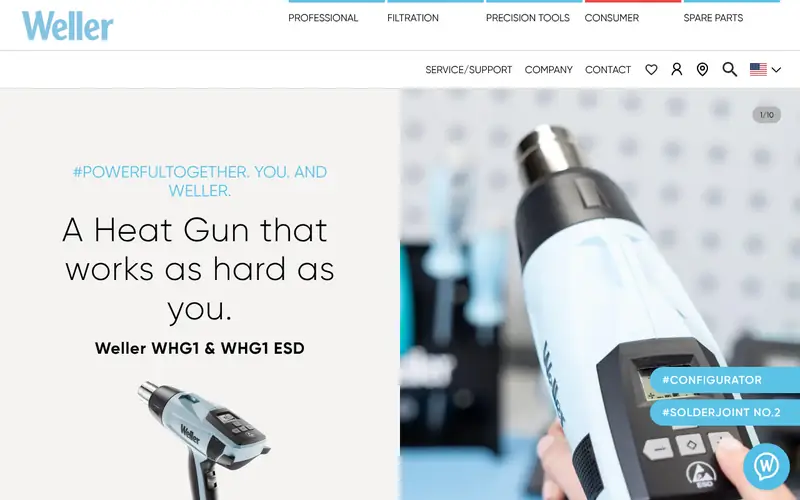
The WE1010 is Weller's digital entry station. The vendor lists a digital display, temperature setting in degrees, and sleep and standby functions that reduce tip oxidation when the iron is idle. It uses Weller's ET tip series.
It suits hobbyists with limited bench space who want digital control and idle protection. The catch is tip compatibility: the ET series is smaller than Hakko's T18 range, so specialty shapes may be harder to source. Check current retail price before buying.
Where the price comes from
Check current retail price. Hardware prices move often, so check the Weller WE1010 maker page or a retailer before you buy.
Benefits
- Digital temperature display
- compact footprint
- sleep and standby features
Drawbacks
- Tip range narrower than Hakko
- some users prefer analog dials
Use case to skip: this limit matters to you: tip range narrower than Hakko.
Our take. A sensible pick for compact digital bench.
If it does not fit, compare Hakko FX-888D or Miniware TS101 in this list.
- Best for
- Portable USB-C work
- Standout
- USB-C power
- Starting price
- Check current retail price
- Free plan or trial
- One-time hardware purchase
The TS101 is a portable soldering iron that runs from USB-C PD power or a DC barrel supply. The vendor lists a cartridge-style tip with an integrated heater and sensor, plus an OLED screen for temperature setting. It heats quickly because the element is in the tip.
It suits hobbyists who solder away from a bench, such as in the field or at a shared desk. The catch is that it is an iron, not a station: no stand, no fume management, and performance depends on the power supply you pair it with. Check current retail price.
Where the price comes from
Check current retail price. Hardware prices move often, so check the Miniware TS101 maker page or a retailer before you buy.
Benefits
- USB-C power
- compact travel size
- fast heat-up from cartridge tip
Drawbacks
- No stand included
- needs a capable power supply
Use case to skip: this limit matters to you: no stand included.
Our take. A sensible pick for portable USB-C work.
If it does not fit, compare Hakko FX-888D or Weller WE1010 in this list.
- Best for
- Budget portable iron
- Standout
- Very low entry price
- Starting price
- Check current retail price
- Free plan or trial
- One-time hardware purchase
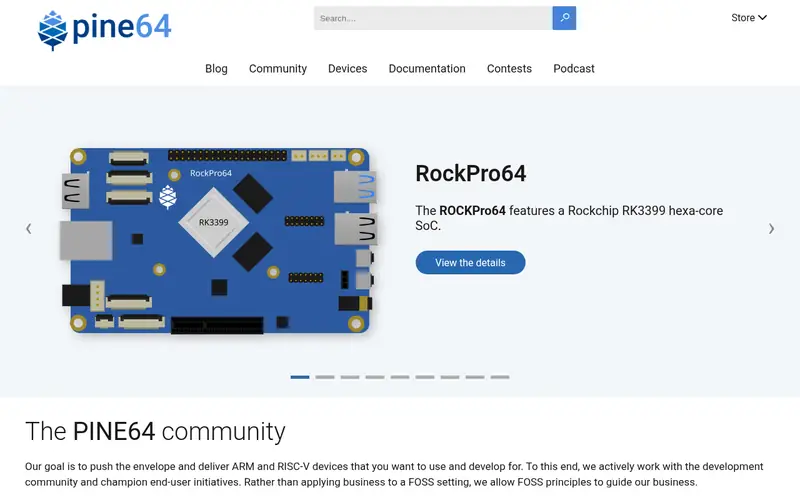
The Pinecil V2 is a low-cost portable iron from Pine64. The vendor lists USB-C PD power input, a cartridge tip with integrated heating, and open-source firmware that can be updated. It uses the same tip family as several portable irons.
It suits beginners and makers who want a spare iron or a travel kit without spending much. The catch is the same as any portable: you supply the stand, the power brick and the fume fan. Check current retail price, since stock and pricing vary.
Where the price comes from
Check current retail price. Hardware prices move often, so check the Pinecil V2 maker page or a retailer before you buy.
Benefits
- Very low entry price
- USB-C PD input
- open firmware
Drawbacks
- Iron only, no stand
- needs a suitable PD supply
Use case to skip: this limit matters to you: iron only, no stand.
Our take. A sensible pick for budget portable iron.
If it does not fit, compare Hakko FX-888D or Weller WE1010 in this list.
- Best for
- Higher-volume cartridge work
- Standout
- Cartridge tips with fast recovery
- Starting price
- Check current retail price
- Free plan or trial
- One-time hardware purchase
The FX-951 is Hakko's cartridge-tip station. The vendor lists a digital display, a sleep function and the T12 tip series, where the heater and sensor sit inside the tip for fast thermal recovery. That design helps when you solder many joints in a row.
It suits hobbyists who do repeated assembly or repair and want consistent heat. The catch is cost: the station is more expensive than the FX-888D, and each T12 tip costs more than a T18 tip. Check current retail price.
Where the price comes from
Check current retail price. Hardware prices move often, so check the Hakko FX-951 maker page or a retailer before you buy.
Benefits
- Cartridge tips with fast recovery
- digital control
- sleep function
Drawbacks
- Higher price
- tip costs add up
Use case to skip: this limit matters to you: higher price.
Our take. A sensible pick for higher-volume cartridge work.
If it does not fit, compare Hakko FX-888D or Weller WE1010 in this list.
- Best for
- Cartridge tips, digital control
- Standout
- Digital temperature control
- Starting price
- Check current retail price
- Free plan or trial
- One-time hardware purchase
The WT1010 is Weller's cartridge-tip station with digital control. The vendor lists a digital display, temperature setting and a compact station body. It uses Weller's cartridge tip series, which puts the heater in the tip for quicker recovery.
It suits hobbyists who want cartridge performance but prefer Weller's ecosystem. The catch is price and tip availability: it costs more than the WE1010, and specialty tips may be harder to find than Hakko's T12 range. Check current retail price.
Where the price comes from
Check current retail price. Hardware prices move often, so check the Weller WT1010 maker page or a retailer before you buy.
Benefits
- Digital temperature control
- cartridge tip design
- compact station body
Drawbacks
- Pricier than entry stations
- tip range narrower than Hakko
Use case to skip: this limit matters to you: pricier than entry stations.
Our take. A sensible pick for cartridge tips, digital control.
If it does not fit, compare Hakko FX-888D or Weller WE1010 in this list.
- Best for
- Budget analog bench
- Standout
- Low entry price
- Starting price
- Check current retail price
- Free plan or trial
- One-time hardware purchase
The LF-1600 is a budget analog station from Xytronic. The vendor lists a temperature dial, a ceramic heating element and a standard bench stand. It is a simple, no-frills unit for basic through-hole work.
It suits beginners who want a full station with a stand at low cost. The catch is the analog dial: you set temperature by eye, not by a digital readout, and tip options are narrower than the big brands. Check current retail price.
Where the price comes from
Check current retail price. Hardware prices move often, so check the Xytronic LF-1600 maker page or a retailer before you buy.
Benefits
- Low entry price
- analog temperature dial
- standard bench format
Drawbacks
- No digital display
- fewer tip options than Hakko
Use case to skip: this limit matters to you: no digital display.
Our take. A sensible pick for budget analog bench.
If it does not fit, compare Hakko FX-888D or Weller WE1010 in this list.
What specs matter when you buy
Temperature stability is the first thing to check. A station that holds temperature under load makes clean joints; a station that sags forces you to dwell longer and risks lifted pads. Look for a vendor datasheet that states temperature range and stability, and prefer a station with a sensor in the tip or close to it.
Tip availability is the second factor. A station is only as good as the tips you can buy for it. Check the tip series name in the vendor documentation and confirm that the shapes you need, such as conical, chisel and hoof, are stocked. Cartridge tips cost more but recover heat faster; classic ceramic-element tips are cheaper and widely available.
Power and heat-up time matter for lead-free solder, which needs more heat than leaded. Check the vendor's stated wattage and heat-up time rather than guessing. Also plan for accessories: a stand, brass wool, a fume extractor and spare tips. None of these are usually included beyond a basic stand.
Questions worth answering first
Buying checklist
- Confirm the tip series name in the vendor datasheet and check that the shapes you need are sold.
- Check the stated temperature range covers lead-free solder if you plan to use it.
- Verify whether a stand, brass wool or fume extractor is included or sold separately.
- Confirm the station's voltage and plug type match your region.
- Read the warranty terms on the vendor site before paying.
- Check current retail price against the manufacturer list price.
FAQ
Do I need a digital soldering station as a beginner?
Not strictly. An analog station with a stable element works for through-hole practice. A digital display helps you repeat settings and spot drift, which matters more as you move to finer SMD work. Choose based on tip availability and temperature stability rather than the display alone.
What wattage is enough for hobby soldering?
For through-hole and light SMD work, most hobbyist stations in the 50 to 80 watt class are adequate. Lead-free solder and larger joints need more heat. Check the vendor's stated wattage and heat-up time rather than relying on a single number.
Are cartridge-tip stations worth the extra cost?
Cartridge tips put the heater and sensor in the tip, which improves thermal recovery during repeated joints. They cost more per tip. If you solder often or work with lead-free solder, the faster recovery can be worth it. For occasional repairs, a classic station is fine.
Can I use a portable USB-C iron as my only soldering tool?
Yes for light work, but you supply the stand, a capable USB-C PD power supply and fume management. Portable irons suit travel and small joints. For sustained bench work, a full station with a stand and stable temperature control is usually more comfortable.
Do soldering stations include fume extraction?
Most hobbyist stations do not include fume extraction. You typically need a separate fume extractor or work near ventilation. Check the box contents on the vendor page before buying so you can budget for it.
How do I check tip compatibility before buying?
Find the tip series name in the vendor datasheet, then confirm that the shapes you need are listed for that series. Tip series are not interchangeable between brands, so match the exact series name rather than the station model.
Sources we checked
Change log: First published 22 Nov 2026.